
Other actions
05 November 2026
EU-funded project develops PFAS-free cellulose membranes for fuel cells and flow batteries
Other actions
05 November 2026
Login / create an account to be able to react
-
7
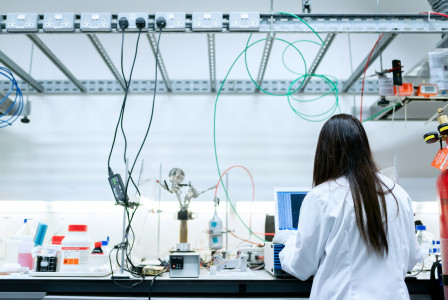
The EIC-funded CNF Membrane project, coordinated by the Swedish company Cellfion, has produced PFAS-free selective membranes from wood pulp cellulose that are described as ready for market uptake. They target applications that currently rely on fluorinated materials, among them redox flow batteries, fuel cell humidifiers for hydrogen-related technologies and ion-separation technologies for water and industrial treatment.
Editorial team
CORDIS
Topics
Sweden
Academic / Research and VET Institutions
Company with 250 or more employees
EU Institutions
SMEs (a company with less than 250 employees)
-
Policy type
-
-
Green transition
-
Share
Selective membranes are an essential component of proton exchange fuel cells, redox flow batteries and hydrogen-related technologies, acting as gatekeepers that let some molecules pass while blocking others. The desired selectivity is produced by introducing specific chemicals into the membrane and modifying its structure, and many current solutions rely on PFAS. With Europe moving to enact broad restrictions on these substances, manufacturers of products that depend on them must find alternatives.
The project builds its membranes from commercially available Scandinavian wood pulp. According to its coordinator, the manufacturing process has a relatively low environmental impact, and replacing fluorinated materials with cellulose offers a significantly more sustainable alternative for future membrane applications. The membranes can be designed to meet specific requirements, and industrial partners involved in the project gave positive feedback on their performance and cost-effectiveness.
Cellfion’s current focus is on redox flow batteries for long-duration energy storage, electromembrane processes and ion-separation technologies, and fuel cell humidifiers. The next step is demonstrating scalability: the project optimised two dewatering methods to support large-scale production, and the company plans investments in production capacity and manufacturing infrastructure. The project had a total cost of about €3.48 million, of which the EU contributed about €2.44 million.
#PFAS #BioBasedChemicals #SafeAndSustainableByDesign #FeedstockSubstitution
Comments (0)
Connected Partnership Opportunities
See also
ZeroPM project concludes with conference on phasing out persistent chemicals
- Categories

EU-funded project develops mechanochemical recycling of fluoropolymers and other PFAS waste
- Categories

EU-funded project develops hydrogen storage with porous materials and ammonia synthesis in membrane reactors
- Categories