

Housing
16 December 2025
Housing in Europe – 2025 edition
Housing
16 December 2025
Login / create an account to be able to react
-
137

The 2025 edition of Housing in Europe is an interactive publication by Eurostat presenting up-to-date statistics on housing across the EU. It covers key aspects such as housing types, ownership, size, quality, environmental impact, housing costs and discrimination in access, enabling comparison across countries and demographic groups through visualised data and concise explanations
Editorial team
Topics
Albania
Armenia
Austria
Belgium
Bosnia and Herzegovina
Bulgaria
Croatia
Cyprus
Czechia
Denmark
Estonia
EU-27
Finland
France
Georgia
Germany
Greece
Hungary
Iceland
Ireland
Italy
Kosovo
Latvia
Liechtenstein
Lithuania
Luxembourg
Malta
Moldova
Montenegro
Netherlands
North Macedonia
Norway
Poland
Portugal
Romania
Serbia
Slovakia
Slovenia
Spain
Sweden
Switzerland
Türkiye
Ukraine
Other
Academic / Research and VET Institutions
Business Support Organisation
Company with 250 or more employees
Cluster Organisations
Consumer Organisations
Cultural and Heritage Organisations
Destination Management & Marketing Organisations
EU Institutions
Financial Institutions and Investors
Industry Associations and Chambers of Commerce
International Organisations
Local Authorities
Media / Journalist Organisations
National authorities
Networks and Federations / Confederations
NGOs / Non-profits
Notified Bodies
Regional Authorities
SMEs (a company with less than 250 employees)
Social Economy Entity
Trade Unions
Other
-
Focus Areas
-
-
Competitiveness
-
Skills and talent
-
Regulatory framework
-
Research, Innovation, Technology
-
Funding
-
Towards a fair and safe built environment
-
Share
The Housing in Europe – 2025 edition interactive publication provides a wide range of statistics on living conditions and housing markets across European Union countries. It highlights significant differences in how people live in terms of dwelling types, ownership status and household size. For example, in 2024 around 68% of the EU population owned their home while 32% were renters, and the average household had about 2.3 persons.
Data on housing quality show variation in living space and occupancy levels: on average there were 1.7 rooms per person in 2024, and 17% of people lived in overcrowded homes, while 33% lived in under-occupied ones. Around 9% of the population could not adequately heat their homes.
The publication also includes information on discrimination when searching for housing, with nearly 6% reporting experiences of discrimination in their search. Differences in housing costs and affordability are depicted, including the share of income spent on housing and the share of households in arrears on rent or mortgage payments.
An environmental perspective is included, showing household emissions related to energy use. The interactive format allows exploration of these indicators and comparisons between countries, offering a detailed statistical basis for understanding housing conditions and trends across the EU.
Comments (0)
See also

EU Agenda for Cities: Driving Growth and Prosperity
- Categories
- Skills and talent Regulatory framework Research, Innovation, Technology +2 more

European Strategy for Housing Construction as industrial pillar of the Commission Affordable Housing package
- Categories
- Skills and talent Regulatory framework Research, Innovation, Technology +2 more
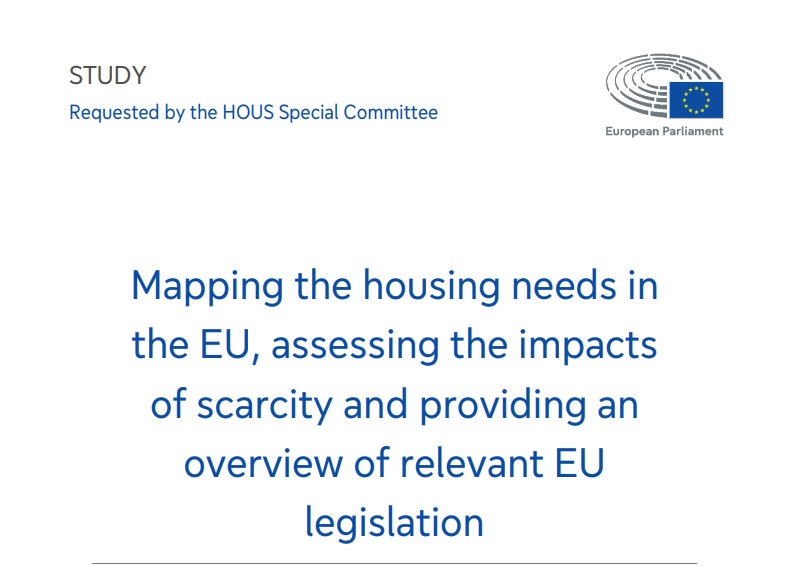
A new study on housing needs across the EU
- Categories
- Skills and talent Regulatory framework Research, Innovation, Technology +2 more