

Best practices
24 November 2026
An innovative fibre processor in a long-established textile cluster: the case of DBT Fibre
Best practices
24 November 2026
Login / create an account to be able to react
-
27
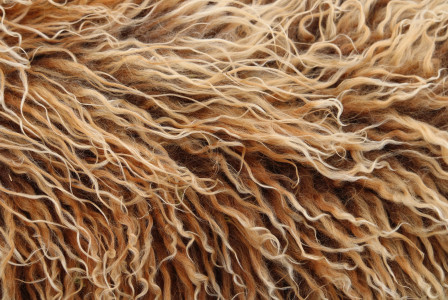
DBT Fibre, an Italian fibre preparation specialist, has developed a mechanical recycling process that preserves fibre length and properties, enabling recycled fibres to be used in high-quality worsted yarns. Through MagnoLab, a network of companies located in the Biella textile cluster, it brings these innovations along the value chain.
DBT Fibre
Topics
Italy
SMEs (a company with less than 250 employees)
-
Transition Pathway's building blocks
-
-
Infrastructure
-
R&I, techniques and technological solutions
-
Sustainable competitiveness
-
-
Industrial ecosystems
-
-
Textile
-
-
Textiles ecosystem areas
-
-
Fibres, yarns and fabrics
-
Technology and Machinery
-
Waste management, reuse and repair
-
Share
From textile waste to high-quality yarns: a value chain challenge
Mechanical textile recycling offers concrete opportunities to reduce waste, recover valuable raw materials and support the transition towards a more circular textile industry. However, transforming recycled fibres into high-quality textile products may still pose technical challenges, as the processes can affect fibre length, strength and uniformity, limiting their potential for reuse in demanding applications. Addressing these issues calls, among other things, for closer coordination along the value chain, from recycling and fibre preparation to spinning, so that the final yarn meets the required quality.1 Such coordination may be easier to achieve when the different stages of the value chain are located close to one another, and companies know each other, share know-how and are used to working together, conditions that are often found in clusters. The case of DBT Fibre and its activities in the Biella textile cluster in Italy illustrates this.
DBT Fibre: combining fibre preparation expertise with recycling
DBT Fibre prepares and blends natural and synthetic fibres for the spinning industry. It develops customised blends that give yarns specific aesthetic and functional properties, and also works with technical fibres such as aramids, used in protective and professional clothing. The company was formed in 2003 through the merger of four European firms, including De Martini and Textifibra, which were among the first in Italy and Spain to produce fibre preparations for decorative yarns on an industrial scale, in the 1960s. Today, the company generates an annual turnover of approximately EUR 15 million and employs around 50 people.2
In 2023, DBT established Closeoop, a division dedicated to textile fibre recycling,3 with an indicative annual production capacity of two million kg of recycled fibres, which varies depending on the type of textile waste processed. Its mechanical recycling process is designed to minimise fibre breakage and preserve the fibre length as well as its technical characteristics. The recovered fibres can then be supplied as loose fibre or further processed in-house into fibre preparations for spinning, using machinery customised for recycled materials. By May 2025, investment in its textile recycling division had doubled over the previous 18 months, including a new quality-control laboratory and a 3,500 m² warehouse. The division is also expanding its activities in post-consumer textiles.4
DBT Fibre as a founding member of MagnoLab: advancing innovation through collaboration
In 2022, the company was among the founders of the MagnoLab network, alongside Di.Vè, Filidea, Maglificio Maggia, Marchi & Fildi and Tintoria Finissaggio 2000.5 Since its foundation, the network has grown to 26 companies.6 Unlike conventional research laboratories, MagnoLab provides industrial-scale pilot machinery covering processes from fibre preparation and spinning to weaving, dyeing and finishing. This allows participating companies to jointly develop and test innovative solutions under conditions close to industrial production, making them easier to scale up. The network also promotes technology transfer and open innovation, connecting established manufacturers with startups and external technology providers through initiatives such as Texploration. Members also work together on joint projects spanning several stages of the value chain. In one recent project, for example, DBT Fibre worked with the spinner Marchi & Fildi and a Biella-based wool mill to turn selected pre-consumer wool scraps into a worsted yarn containing 50% recycled wool, with DBT handling mechanical recycling and fibre preparation. Produced entirely within the Biella textile cluster, the yarn was presented at the Venice Sustainable Fashion Forum in November 2026.7
Conclusion
Although its recycling activities are still at an early stage of scale-up, DBT Fibre’s case shows how investment in technology, combined with collaboration among companies with complementary expertise, can drive innovation across the value chain. Proximity also plays a key role: in the recycled wool project mentioned above, with all processing stages located within the Biella cluster, companies were able to work closely together and recycled fibre could be brought back into production without leaving the local supply chain.
1Source: VDMA Textile Machinery (2024). Position Statement: Textile machinery for a sustainable textile industry.
2Source: Orbis database, Bureau van Dijk / Moody’s Analytics.
3Source: Unione Industriale Biellese (2024). Closeoop, la nuova linea dedicata al riciclo di DBT.
4Source: Il Biellese (2025). Con Closeoop una seconda vita per le fibre tessili.
5Source: Unione Industriale Biellese (2022). MagnoLab, 6 aziende biellesi creano il textile innovation district.
6Source: MagnoLab (2026). Sella joins the MagnoLab Network.
7Source: Il Biellese (2026). “Venice Fashion Forum”, MagnoLab presenta il filato rivoluzionario.
Comments (0)
Connected Partnership Opportunities
See also
The role of trade fairs in supporting an ecosystem approach: the case of Textiles Recycling Expo
- Categories
- Infrastructure Investments and funding R&I, techniques and technological solutions +11 more
BIOTEXFUTURE: transforming the textile industry towards bio-based materials
- Categories
- Investments and funding R&I, techniques and technological solutions Social dimension +6 more
Industrial symbiosis: textile waste as a resource for furniture production
- Categories
- Infrastructure Investments and funding R&I, techniques and technological solutions +10 more