

Best practices
24 July 2026
The role of trade fairs in supporting an ecosystem approach: the case of Textiles Recycling Expo
Best practices
24 July 2026
Login / create an account to be able to react
-
68
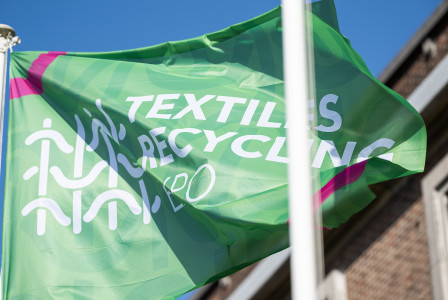
Textile recycling requires coordination across a highly fragmented value chain that involves technology providers, recyclers, manufacturers, brands, retailers, public authorities, and industry organisations. The success of Textiles Recycling Expo indicates a clear need for specialised platforms where these actors can present solutions, discuss shared challenges and explore opportunities for cooperation.
Topics
Albania
Armenia
Austria
Belgium
Bosnia and Herzegovina
Bulgaria
Croatia
Cyprus
Czechia
Denmark
Estonia
EU-27
Finland
France
Georgia
Germany
Greece
Hungary
Iceland
Ireland
Italy
Kosovo
Latvia
Liechtenstein
Lithuania
Luxembourg
Malta
Moldova
Montenegro
Netherlands
North Macedonia
Norway
Poland
Portugal
Romania
Serbia
Slovakia
Slovenia
Spain
Sweden
Switzerland
Türkiye
Ukraine
Other
Academic / Research and VET Institutions
Business Support Organisation
Company with 250 or more employees
Cluster Organisations
Consumer Organisations
Cultural and Heritage Organisations
Destination Management & Marketing Organisations
EU Institutions
Financial Institutions and Investors
Industry Associations and Chambers of Commerce
International Organisations
Local Authorities
Media / Journalist Organisations
National authorities
Networks and Federations / Confederations
NGOs / Non-profits
Notified Bodies
Regional Authorities
SMEs (a company with less than 250 employees)
Social Economy Entity
Trade Unions
Other
-
Transition Pathway's building blocks
-
-
Ecosystem's readiness to support EU strategic autonomy and defence efforts
-
Infrastructure
-
Investments and funding
-
R&I, techniques and technological solutions
-
Skills
-
Social dimension
-
Sustainable competitiveness
-
Regulation and public governance
-
-
Industrial ecosystems
-
-
Textile
-
-
Textiles ecosystem areas
-
-
Fibres, yarns and fabrics
-
Apparel and clothing accessories
-
Technical textiles
-
Research and Innovation
-
Technology and Machinery
-
Waste management, reuse and repair
-
Share
Introduction
Textile recycling depends on several interconnected factors, including feedstock quality, available technologies, processing capacity and scale, regulatory clarity and demand for recycled materials. Europe is progressing in a number of these areas. However, textile recycling involves actors with substantially different roles, resources and business models (from municipalities to brands, from machinery suppliers to retailers), and coordination remains necessary to connect individual efforts to build a functioning circular system.
Textiles Recycling Expo was established to address the need for a specialised meeting place focused on circularity, bringing these actors together to present and compare technologies, discuss current challenges and gaps, and identify potential areas for cooperation and new market opportunities.
The concept of Textiles Recycling Expo
Textiles Recycling Expo is a European exhibition and conference platform dedicated specifically to textile recycling and circularity. Its first edition took place at Brussels Expo in June 2025. Textile Recycling Expo is organised by AMI-Applied Market Information, an events and market information company active in plastics and textiles. It is supported by several companies active in the EU Textile Ecosystem and sees the presence, as Structural Partner, of ReHubs, the European initiative focused on scaling textile-to-textile recycling.
The event covers different parts of the textile recycling value chain, including collection and sorting systems, shredding and pre-processing machinery, mechanical and chemical recycling technologies, regenerated fibres, digital traceability solutions and products manufactured with reclaimed materials. The exhibition format includes a conference programme comprising presentations and panel discussions involving companies, industry organisations, technology providers and public institutions.
A central space at the exhibition was the Industry Alliance Hub, a shared area where sectoral associations and collaborative initiatives met participants, presented their activities and discussed common issues. In 2026, the hub brought together seven organisations, representing different parts of the ecosystem but all committed to increasing textiles’ circularity: ReHubs, EURATEX, Fedustria, Denim Deal, Accelerating Circularity, the UK Fashion and Textile Association and the Professional Clothing Industry Association Worldwide. The event also included a VIP Lounge sponsored by Reju to facilitate bilateral and small-group discussions outside the formal conference programme.
Event participation and expansion
The first edition took place on 4-5 June 2025 at Brussels Expo, attracting approximately 3,300 visitors, 125 exhibitors and 56 conference speakers.
The second edition, held on 24–25 June 2026, was co-located alongside Future Fabrics Expo and together, both events recorded 5,607 attendees. At the same time, exhibitor participation rose from 125 to 169 organisations, and the number of speakers increased from 56 to 71. The exhibitor and speaker lists also showed increasing global participation, with over 30 countries represented, including both EU exhibitors and Asian and American companies operating internationally.
This expansion suggests growing demand for a dedicated forum addressing textile recycling across the value chain. A third European edition has already been announced for 16–17 June 2027, taking place in Hall 5 of the Brussels Expo, and the organisers are planning a larger exhibition footprint to accommodate additional exhibitors and meeting areas.
Conclusion
Textile Recycling Expo combines the functions of a commercial trade fair, a technical conference and a meeting platform for organisations involved in the transition towards textile circularity, where fragmented actors converge to share innovation, identify bottlenecks, and coordinate on shared standards and investment priorities. This concept, embedding industry leadership within an ecosystem approach, distinguishes Textile Recycling Expo from purely commercial or purely academic forums. The increase in attendance, exhibitors, and speakers between 2025 and 2026, and the plans for 2027, suggest that there is demand for this type of specialised convening platform. Although developing circular models after centuries of optimisation around linear production and consumption systems will remain a long-term challenge, events such as Textile Recycling Expo can still contribute by supporting coordination, knowledge exchange and cooperation across the value chain.
Comments (0)
Connected Partnership Opportunities
See also
Industrial symbiosis: textile waste as a resource for furniture production
- Categories
- Infrastructure Investments and funding R&I, techniques and technological solutions +10 more
Call for pledges to advance the EU Textiles Ecosystem
- Categories
- Infrastructure Investments and funding R&I, techniques and technological solutions +16 more
A platform that connects, informs and inspires: highlights from the 2025 community engagement survey
- Categories
- Infrastructure Investments and funding R&I, techniques and technological solutions +28 more