

Best practices
23 February 2026
Turning legacy know-how into a circular business in the textile sector and beyond: the case of Pulvera
Best practices
23 February 2026
Login / create an account to be able to react
-
132
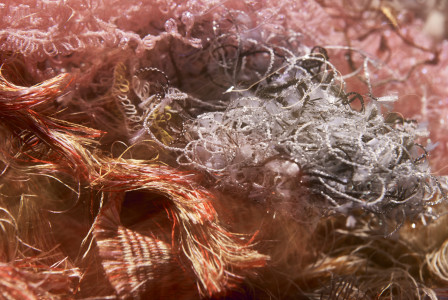
Pulvera is a newly established Italian company that leverages the textile pulverisation expertise developed within its family-run business, through a scalable process, to convert collected textile waste into textile fibre-based composites for a range of industries, including textiles, furniture, and beyond. Pulvera is an example of how innovative circular business models can open new business opportunities.
Pulvera
Topics
Albania
Armenia
Austria
Belgium
Bosnia and Herzegovina
Bulgaria
Croatia
Cyprus
Czechia
Denmark
Estonia
EU-27
Finland
France
Georgia
Germany
Greece
Hungary
Iceland
Ireland
Italy
Kosovo
Latvia
Liechtenstein
Lithuania
Luxembourg
Malta
Moldova
Montenegro
Netherlands
North Macedonia
Norway
Poland
Portugal
Romania
Serbia
Slovakia
Slovenia
Spain
Sweden
Switzerland
Türkiye
Ukraine
Other
Academic / Research and VET Institutions
Business Support Organisation
Company with 250 or more employees
Cluster Organisations
Consumer Organisations
Cultural and Heritage Organisations
Destination Management & Marketing Organisations
EU Institutions
Financial Institutions and Investors
Industry Associations and Chambers of Commerce
International Organisations
Local Authorities
Media / Journalist Organisations
National authorities
Networks and Federations / Confederations
NGOs / Non-profits
Notified Bodies
Regional Authorities
SMEs (a company with less than 250 employees)
Social Economy Entity
Trade Unions
Other
-
Transition Pathway's building blocks
-
-
R&I, techniques and technological solutions
-
Sustainable competitiveness
-
-
Industrial ecosystems
-
-
Textile
-
-
Textiles ecosystem areas
-
-
Fibres, yarns and fabrics
-
Research and Innovation
-
Waste management, reuse and repair
-
Share
The company’s mission and approach
Pulvera is an Italian company founded in 2024 by the third generation of Casati, a family with long-standing expertise in the textile sector. Pulvera’s mission is to transform textile production scraps into new value-added materials. To achieve this, the company offers a comprehensive, full-lifecycle service that bridges the gap between strategic consulting and industrial production. This end-to-end approach begins with waste assessment and consulting for third parties, helping them identify the best strategies to valorise their textile waste, and culminates in the manufacturing of innovative recycled materials.
The manufacturing process
Pulvera collects textile waste of any fibre composition and converts it through the pulverisation process. The resulting output is then blended with other materials to create "textile fibre-based" composites. At the heart of Pulvera’s operations is a specialised transformation process that leverages on the proprietary powdering technology developed by Casati Flock & Fibers.
Moving beyond conventional textile-to-textile recycling systems
Pulvera constantly experiments with alternative applications for its fibres, going beyond the traditional textile-to-textile recycling model. By adopting an "industrial symbiosis" business model, Pulvera enables a circular flow where the waste of the textile sector becomes a primary resource for other industries, such as furniture and automotive manufacturing. This approach creates a dual benefit: it reduces the generation of textile waste while simultaneously decreasing the industry's reliance on virgin materials.
Conclusion
Pulvera testifies that new generations can play a key role in rethinking traditional manufacturing processes towards new circular models. It also shows that moving beyond the conventional view of textile scraps as merely an end-of-life problem, and instead treating them as a valuable input, can unlock new markets and create business opportunities.
Comments (0)
Connected Partnership Opportunities
See also
BALI Chaire: Multi-stakeholder collaboration as a driver of systemic change
- Categories
- R&I, techniques and technological solutions Skills Social dimension +9 more
Industrial symbiosis: textile waste as a resource for furniture production
- Categories
- Infrastructure Investments and funding R&I, techniques and technological solutions +10 more

Closing the loop in the carpet industry: Ege Carpets initiatives*
- Categories
- Sustainable competitiveness Construction Textile +6 more