

Library and support resources
14 July 2026
EU testing highlights widespread inaccuracies in clothing fibre labelling
Library and support resources
14 July 2026
Login / create an account to be able to react
-
315
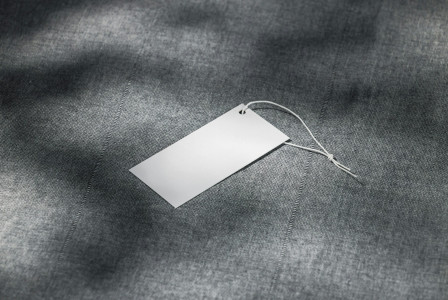
The European Commission’s EU-wide testing campaign found that 37% of sampled clothing items contained inaccurate fibre composition labels, highlighting the need for stronger compliance, improved consumer transparency, and more reliable information to support circular textile value chains.
Topics
Cyprus
Denmark
EU-27
Finland
Germany
Italy
Lithuania
Malta
Portugal
Academic / Research and VET Institutions
Business Support Organisation
Company with 250 or more employees
Cluster Organisations
Consumer Organisations
Cultural and Heritage Organisations
Destination Management & Marketing Organisations
EU Institutions
Industry Associations and Chambers of Commerce
International Organisations
Local Authorities
National authorities
Networks and Federations / Confederations
Regional Authorities
SMEs (a company with less than 250 employees)
Trade Unions
-
Transition Pathway's building blocks
-
-
Sustainable competitiveness
-
Regulation and public governance
-
-
Industrial ecosystems
-
-
Textile
-
-
Textiles ecosystem areas
-
-
Apparel and clothing accessories
-
Research and Innovation
-
Business support and Communication
-
Share
The European Commission has published the findings of an EU-wide testing campaign examining the accuracy of textile fibre labels on clothing sold across the European market. The campaign assessed 132 clothing items purchased in eight Member States, identifying widespread discrepancies between declared and actual fibre compositions. The findings underline the importance of accurate textile labelling for consumer protection, fair competition, and the effective functioning of circular textile value chains.
Key takeaways
More than one-third of garments were incorrectly labelled. Testing found that 49 of the 132 clothing items (37%) did not accurately reflect the materials used in the products.
- Three main types of non-compliance were identified. These included incorrect fibre percentages despite the correct fibre being listed, the use of different and often lower-cost fibres than those declared, and fibres that were incorrectly named or declared on the label.
- A wide range of clothing categories were tested. The campaign covered tops, baby clothing, activewear, nightwear, scarves, and other garments made from wool, cotton, and blended fibres, providing a broad picture of labelling practices across the market.
- Blended fibre products presented the greatest challenges. Garments containing fibre blends showed the highest levels of non-compliance, highlighting the complexity of accurately identifying and declaring mixed textile compositions.
- Accurate labelling is essential for circularity. Reliable information on fibre composition supports consumers in making informed purchasing decisions while enabling better sorting, recycling, and material recovery within circular textile systems. Inaccurate labels can undermine recycling efficiency and reduce trust across the value chain.
- The findings support stronger market surveillance. The Commission noted that accurate textile labelling is vital for maintaining a level playing field for businesses and ensuring compliance with EU textile labelling legislation.
The testing campaign highlights the continued importance of accurate textile fibre labelling in supporting consumer confidence, regulatory compliance, and the transition towards a more circular textile economy.
Readers are encouraged to consult the original article on European Commission website.
Comments (0)
Related content
Connected Partnership Opportunities
See also
The EIT KICs Position Paper for a Circular and Sustainable Fashion and Textiles Industry in Europe
- Categories
- Infrastructure Investments and funding R&I, techniques and technological solutions +20 more
The EU’s 2024 Industrial Report reveals green and digital pathways for textiles transformation
- Categories
- Infrastructure Investments and funding R&I, techniques and technological solutions +16 more

The EU’s vision for sustainable fashion: transforming the textiles sector by 2030
- Categories
- Infrastructure Investments and funding R&I, techniques and technological solutions +28 more