

News
21 September 2026
Chinese researchers develop self-repairing, biodegradable living fungal textile
News
21 September 2026
Login / create an account to be able to react
-
8
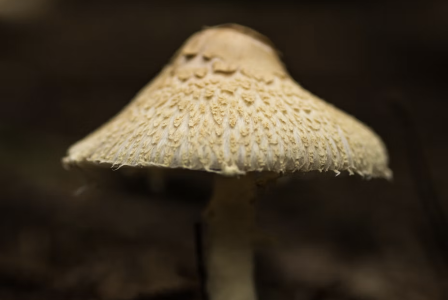
Researchers in China have developed a living fungal textile that can repair damaged areas and biodegrade within approximately 41 days. The material could support more circular approaches to short-term textile products.
Shenzhen Institutes of Advanced Technology
Topics
Other
Academic / Research and VET Institutions
-
Transition Pathway's building blocks
-
-
R&I, techniques and technological solutions
-
-
Industrial ecosystems
-
-
Textile
-
-
Textiles ecosystem areas
-
-
Fibres, yarns and fabrics
-
Research and Innovation
-
Waste management, reuse and repair
-
Share
Researchers at the Shenzhen Institutes of Advanced Technology have developed a living textile from Cordyceps militaris, a thread-forming fungus. Unlike most existing fungus-based materials, the fungus remains alive, allowing the textile to perform additional functions after production.
The researchers cultivated mycelium, the network of fine threads that forms the main body of a fungus, into connected sheets. These sheets were then treated with glycerol to make the material softer and more flexible while keeping the fungus alive.
Because the material remains living, nutrients can be supplied to encourage new growth over damaged areas. This enables the textile to repair and renew its surface, which could help reduce waste by extending its usable life. The researchers also showed that other microorganisms could be added to create coloured patterns or provide protection from ultraviolet radiation.
During environmental testing, the material biodegraded in approximately 41 days. This could support more circular production models, particularly for short-term products designed to decompose after use instead of remaining in landfill. Possible applications include packaging, temporary installations and event structures.
However, the material is not yet ready for commercial use. Further research is needed to address its storage, contamination, durability and shelf-life challenges, and to assess its environmental advantages over conventional textiles.
For further information, please read more on Textile Today.
Comments (0)
Connected Partnership Opportunities
See also
EU spotlights global circular economy at Osaka World Expo
- Categories
- Infrastructure Investments and funding R&I, techniques and technological solutions +20 more

Contribute to the European Commission survey on Product Safety Information & E-Vulnerability
- Categories
- Social dimension Sustainable competitiveness Regulation and public governance +23 more
Transform to perform: M4CF 2025/2026 multistakeholder event
- Categories
- Skills Social dimension Sustainable competitiveness +13 more