

Projects
18 August 2026
MELANGE project begins work on more sustainable textile colour design
Projects
18 August 2026
Login / create an account to be able to react
-
134
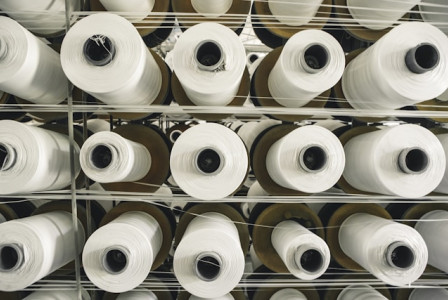
The Horizon Europe MELANGE project has begun developing new approaches to textile colour design that aim to reduce environmental impacts by integrating colour at an earlier stage of production and embracing variation as part of more sustainable textile aesthetics.
Topics
Austria
Belgium
Bulgaria
Croatia
Cyprus
Czechia
Denmark
Estonia
EU-27
Finland
France
Georgia
Germany
Greece
Hungary
Ireland
Italy
Latvia
Lithuania
Luxembourg
Malta
Moldova
Netherlands
Poland
Portugal
Romania
Slovakia
Slovenia
Spain
Sweden
Academic / Research and VET Institutions
Business Support Organisation
Company with 250 or more employees
EU Institutions
Industry Associations and Chambers of Commerce
International Organisations
Media / Journalist Organisations
National authorities
Networks and Federations / Confederations
SMEs (a company with less than 250 employees)
Social Economy Entity
-
Transition Pathway's building blocks
-
-
R&I, techniques and technological solutions
-
Social dimension
-
Sustainable competitiveness
-
-
Industrial ecosystems
-
-
Textile
-
-
Textiles ecosystem areas
-
-
Fibres, yarns and fabrics
-
Apparel and clothing accessories
-
Household/interior textiles
-
Technical textiles
-
Research and Innovation
-
Technology and Machinery
-
Share
The Horizon Europe-funded MELANGE project officially started on 1 August 2026, aiming to reduce the environmental impact of interior textile production by moving colour design to the beginning of the manufacturing process. The project brings together researchers, designers, industrial partners and textile networks to explore new approaches to colour that can reduce the use of water, energy and chemicals in textile production.
MELANGE challenges the conventional focus on colour uniformity and replicability, instead exploring variation as a desirable feature of textile products. Over the next three years, the project will combine design, technology and business expertise to support the development of new aesthetics and more sustainable approaches to textile colouration, with the aim of informing designers, industry and policymakers.
Led by Aalto University, the consortium brings together partners from across the textile value chain, including fibre, spinning, weaving and interior design companies, as well as research, technology, public affairs and textile organisations. Textile ETP is leading communications, dissemination and stakeholder engagement activities for the project.
As part of the project’s start-up activities, Textile ETP joined the Aalto University team from 4-6 August for a co-creative design workshop focused on developing MELANGE’s visual identity. The workshop explored how the project’s core values of colour design, circularity and sustainable competitiveness could be translated into a distinctive visual language. The new visual identity is scheduled to be presented on 27 August 2026 and will support communication with industry and design stakeholders, policymakers and the wider public throughout the project.
To get more details, read the entire article on Textile ETP website.
Comments (0)
Connected Partnership Opportunities
See also

UNECE project: Enhancing Transparency and Traceability of Value Chains in Strategic Sectors
- Categories
- Investments and funding R&I, techniques and technological solutions Skills +26 more

Shaping the TCLF skills observatory: an open call for contributions
- Categories
- R&I, techniques and technological solutions Skills Social dimension +14 more
The WEAFING project: enabling wearable electroactive fabrics for next‑generation smart garments
- Categories
- R&I, techniques and technological solutions Social dimension Sustainable competitiveness +12 more