

Articles
12 January 2026
European Tourism in 2025: Performance
Articles
12 January 2026
Login / create an account to be able to react
-
1680
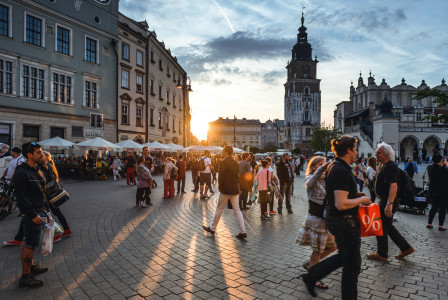
After several years shaped by disruption, rebound and adjustment, 2025 stands out as a benchmark year for European tourism. While the broader geopolitical and economic context remains challenging, travel activity across much of Europe has continued to evolve under more stable operating conditions. This makes 2025 particularly relevant for understanding how the sector is performing beyond short-term recovery dynamics.
Looking at tourism performance in 2025 offers a clear sense of how the sector is settling into its next phase. With the rebound behind it, growth has become more measured and uneven, bringing differences between destinations into sharper focus. For many regions, tourism continues to play a central role in local economies, supporting jobs, businesses and services. How tourism unfolded over the year therefore provides valuable clues about how destinations are navigating ongoing pressures — and how confidently they are moving into the period ahead. For readers interested in the broader forces shaping these outcomes, including digitalisation, sustainability and EU policy responses, see our article Tourism in 2025: Key Trends, Developments and EU Policy Highlights.
Topics
Albania
Armenia
Austria
Belgium
Bosnia and Herzegovina
Bulgaria
Croatia
Cyprus
Czechia
Denmark
Estonia
EU-27
Finland
France
Georgia
Germany
Greece
Hungary
Iceland
Ireland
Italy
Kosovo
Latvia
Liechtenstein
Lithuania
Luxembourg
Malta
Moldova
Montenegro
Netherlands
North Macedonia
Norway
Poland
Portugal
Romania
Serbia
Slovakia
Slovenia
Spain
Sweden
Switzerland
Türkiye
Ukraine
Other
Academic / Research and VET Institutions
Business Support Organisation
Company with 250 or more employees
Cluster Organisations
Consumer Organisations
Cultural and Heritage Organisations
Destination Management & Marketing Organisations
EU Institutions
Financial Institutions and Investors
Industry Associations and Chambers of Commerce
International Organisations
Local Authorities
Media / Journalist Organisations
National authorities
Networks and Federations / Confederations
NGOs / Non-profits
Notified Bodies
Regional Authorities
SMEs (a company with less than 250 employees)
Social Economy Entity
Trade Unions
Other
-
Specific types of tourism
-
-
Adventure tourism
-
Coastal, maritime and inland water tourism
-
Cultural tourism
-
Ecotourism
-
Education tourism
-
Festival tourism
-
Gastronomy tourism
-
Health and medical tourism
-
MICE tourism
-
Mountain tourism
-
Religious tourism
-
Rural tourism
-
Sports tourism
-
Urban/city tourism
-
Wellness tourism
-
-
Transition Pathway Strategic Areas
-
-
Accessible tourism services
-
Best practices, peer learning and networking
-
Changes in tourism demand and opportunities
-
Circularity of tourism services
-
Coordinated information on travelling
-
Cross-border travelling
-
Digitalisation of tourism SMEs and destinations
-
Equal and fair tourism jobs
-
Funding and support measures
-
Governance of tourism destinations
-
Green Transition of Tourism Companies and SMEs
-
Improving formal education
-
Improving statistics and indicators
-
Innovative tourism services
-
Multimodal travelling
-
Online visibility of tourism offer
-
Pact for skills
-
Promoting PEF/OEF methods for tourism
-
R&I on climate-friendly tourism
-
R&I on digital tools for tourism
-
Short-term rentals
-
Skills needs for twin transition
-
Sustainable mobility
-
Tools for data on tourism
-
Tourism strategies
-
Training opportunities
-
Well-being of residents
-
-
Business activities
-
-
Activities of amusement parks and theme parks
-
Activities of associations and other organisations supporting tourism
-
Air passenger transport
-
Camping grounds, recreational vehicle parks and trailer parks
-
Events catering and other food services
-
Festivals, cultural and entertainment activities
-
Gardens and nature reserves activities
-
Holiday Housing / Apartments and other short stay accommodation
-
Hotel and similar accommodation
-
Mobile beverage services
-
Mobile food services
-
Museums
-
Operation of historical sites
-
Other
-
Other accommodation
-
Other amusement and recreation activities
-
Other food and beverage services
-
Other holiday reservation services
-
Other tourism transportation activities
-
Rail Passenger transport
-
Recreational and sport activities
-
Restaurants, cafes and bars (Food and Beverage serving activities)
-
Road passenger transport
-
Tour operator activities
-
Travel agency activities
-
Water (sea, coastal and inland) passenger transport
-
Share
Total Tourism Activity in 2025
In 2025, European tourism continued to move forward — not with the exuberance of the immediate rebound years, but with a steadier and more revealing rhythm. According to Eurostat, the number of nights spent at tourist accommodation establishments in the EU rose again compared with 2024, confirming that demand for travel remained resilient even as growth began to level out. In the first half of the year alone, travellers spent around 1.28 billion nights across the EU, an increase of 2.3% year on year. This performance builds on the exceptionally strong results of 2024, when total nights spent in EU tourist accommodation surpassed 3 billion, exceeding pre-pandemic levels for the first time.
Who Travelled in 2025?
The composition of demand in 2025 tells an equally important story. Eurostat data shows that domestic and international travel both played a strong role, with non-resident guests accounting for close to half of all nights spent in EU tourist accommodation in the first half of the year. This balance matters. A solid domestic market provides a degree of stability at times of external uncertainty, while continued international travel reflects Europe’s enduring appeal as a destination.
How Tourism Performed Over the Year: Timing and Seasonality
A closer look at 2025 shows that when people travelled mattered almost as much as how much they travelled. Tourism activity followed a familiar seasonal pattern, with a slower start to the year giving way to a strong summer-driven performance.
The year opened cautiously. In the first quarter of 2025, nights spent at tourist accommodation establishments fell slightly compared with the same period in 2024, largely due to calendar effects. Easter fell in April rather than March, shifting a significant share of travel into the second quarter. The data points to delayed trips rather than weaker demand.
Momentum picked up decisively in the spring. The second quarter marked a return to growth, as Easter travel combined with improving weather and the start of the high season. By early summer, tourism activity had clearly accelerated. Between July and September 2025, guests spent significantly more nights in EU tourist accommodation than a year earlier, confirming the central role of the summer months in driving annual performance.
The picture for the final months of the year is not yet fully complete. A full assessment of fourth-quarter performance will only be possible once consolidated data is published in 2026. What is already evident, however, is that seasonality remains a defining feature of European tourism.
Uneven Performance Across the EU: National and Regional Results
At first glance, the EU’s tourism figures for 2025 suggest steady progress. Look closer, however, and a far more uneven picture emerges. Behind the aggregate growth lie sharp contrasts between countries gaining momentum and others struggling to keep pace. In tourism, geography still matters.
Countries with Noticeable Growth
In the first half of 2025, a handful of Member States stood out for their strong performance. Malta, Latvia and Poland recorded some of the largest increases in overnight stays compared with the same period last year, well above the EU average growth rate of 2.3%. In Malta and Latvia, tourism buoyancy came from both foreign visitors and return demand, while in Poland the rise was bolstered more by domestic travellers who continued to explore their own country.
Across much of southern Europe, popular destinations also enjoyed robust summer months. According to recent Eurostat figures on short-stay accommodation, regions such as Andalucía (Spain), Jadranska Hrvatska (Croatia) and Île-de-France (France) were among the top performers for nights booked via online platforms in the second quarter of 2025 — suggesting that holiday hotspots remained magnets for travellers.
Markets with Slower Growth
Not every market saw such momentum. In contrast, Germany, Sweden and Belgium reported much more modest increases, and Ireland even experienced a decrease in overnight stays during the first half of the year. In larger tourism markets with a greater reliance on domestic travellers, this more subdued performance reflects both softer demand at home and a less pronounced summer surge compared with smaller or highly tourism-oriented countries.
Where Tourists Stayed in 2025: Accommodation Performance
Where visitors chose to stay in 2025 tells an important — and rather lively — story about how European tourism is functioning today. Traditional accommodation continued to carry the bulk of demand, but short-stay rentals booked via online platforms added flexibility and extra capacity, especially when travel volumes peaked.
Traditional Accommodation Establishments
Hotels and similar accommodation remained the backbone of tourism activity across the EU. Data shows that they accounted for the majority of nights spent at tourist accommodation establishments in 2025, particularly during peak travel periods
Their performance followed a familiar seasonal pattern. Occupancy rose steadily from spring and peaked in summer, highlighting the continued importance of hotels in accommodating large visitor flows. In cities and established holiday destinations alike, hotels offered scale, reliability and year-round availability — qualities that proved essential during the high season.
Short-Stay Accommodation via Online Platforms
Alongside hotels, short-stay accommodation offered through online platforms continued to gain ground in 2025. Eurostat figures show a strong increase in nights booked via collaborative economy platforms, particularly during the second and third quarters of the year. This growth was most visible in urban centres and coastal regions, where short-stay rentals helped absorb peak-season demand. In popular destinations, they played a valuable supporting role, expanding accommodation options and easing pressure during the busiest months. In performance terms, this combination helped European destinations respond effectively to strong summer demand in 2025 — and offered travellers a wider choice of places to stay than ever before.
Interpreting the Results
What do the 2025 figures really tell us? Above all, they point to a tourism sector that continued to attract travellers. Demand remained solid, especially when it mattered most, yet growth was shaped as much by practical constraints as by appetite for travel. Despite ongoing efforts to encourage travel outside the summer months, July, August and early September continued to set the tone for annual results.
Demand remains strong, but growth is no longer automatic. Without changes that allow tourism activity to spread more evenly over time and space, expansion is likely to remain gradual. A deeper exploration of the broader forces shaping tourism in 2025 — from sustainability and digitalisation to skills and competitiveness — is available in the article Tourism in 2025: Key Trends, Developments and EU Policy Highlights.
Looking ahead, the figures suggest that performance will increasingly be shaped by how effectively destinations respond to demand, rather than by demand alone. Timing, capacity and local conditions are becoming as important as visitor numbers.
A Year of Solid but Uneven Performance
Taken as a whole, 2025 underlines the enduring strength of European tourism. Activity continued to expand, the peak season delivered once again, and destinations across the EU showed that tourism can perform confidently under more settled conditions. As in previous years, the summer months provided the decisive push, setting the pace and shaping overall results.
At the same time, the data paints a picture of diversity rather than uniformity. Some destinations moved ahead at speed, others advanced more gradually, reflecting the many different tourism models at work across Europe. Together, these contrasts highlight a sector that is dynamic, resilient and far from one-size-fits-all — a hallmark of European tourism’s continued vitality.
Comments (0)
Related content


See also
Destination Europe & Ukraine: Closing Messages
- Categories
- Coastal, maritime and inland water tourism Cultural tourism Ecotourism +64 more
People of the Platform: putting skills, resilience and inclusion at the heart of tourism’s next chapter
- Categories
- Coastal, maritime and inland water tourism Cultural tourism Ecotourism +64 more
European Tourism Day—shaping the tourism of tomorrow
- Categories
- Coastal, maritime and inland water tourism Cultural tourism Ecotourism +64 more