

Knowledge documents
08 July 2026
“Short Term Rental and Data Sharing” Summary
Knowledge documents
08 July 2026
Login / create an account to be able to react
-
32

At a glance
Digital Transition
The topic focused on how short term rental (STR) data gaps are addressed through coordinated data collection, standardisation and harmonised data sharing frameworks, involving destinations, public authorities, and digital platforms. It highlighted the value of reliable and comparable data for tourism management, housing policies, and evidence based decision making at local, regional, national and European levels.
Why it matters?
The rapid growth of STRs has created challenges related to housing availability, market transparency, and the management of tourism pressure in destinations. Improved access to high quality STR data enables public authorities to better monitor market developments, enforce regulations, and design balanced policies that support sustainable tourism while protecting local communities and housing markets.
Editorial team
Topics
Albania
Armenia
Austria
Belgium
Bosnia and Herzegovina
Bulgaria
Croatia
Cyprus
Czechia
Denmark
Estonia
EU-27
Finland
France
Georgia
Germany
Greece
Hungary
Iceland
Ireland
Italy
Kosovo
Latvia
Liechtenstein
Lithuania
Luxembourg
Malta
Moldova
Montenegro
Netherlands
North Macedonia
Norway
Poland
Portugal
Romania
Serbia
Slovakia
Slovenia
Spain
Sweden
Switzerland
Türkiye
Ukraine
Other
Academic / Research and VET Institutions
Business Support Organisation
Company with 250 or more employees
Cluster Organisations
Consumer Organisations
Cultural and Heritage Organisations
Destination Management & Marketing Organisations
EU Institutions
Financial Institutions and Investors
Industry Associations and Chambers of Commerce
International Organisations
Local Authorities
Media / Journalist Organisations
National authorities
Networks and Federations / Confederations
NGOs / Non-profits
Notified Bodies
Regional Authorities
SMEs (a company with less than 250 employees)
Social Economy Entity
Trade Unions
Other
-
Specific types of tourism
-
-
Adventure tourism
-
Coastal, maritime and inland water tourism
-
Cultural tourism
-
Ecotourism
-
Education tourism
-
Festival tourism
-
Gastronomy tourism
-
Health and medical tourism
-
MICE tourism
-
Mountain tourism
-
Religious tourism
-
Rural tourism
-
Sports tourism
-
Urban/city tourism
-
Wellness tourism
-
-
Transition Pathway Strategic Areas
-
-
Coordinated information on travelling
-
Cross-border travelling
-
Digitalisation of tourism SMEs and destinations
-
Improving statistics and indicators
-
R&I on climate-friendly tourism
-
Short-term rentals
-
Tools for data on tourism
-
-
Business activities
-
-
Activities of amusement parks and theme parks
-
Activities of associations and other organisations supporting tourism
-
Air passenger transport
-
Camping grounds, recreational vehicle parks and trailer parks
-
Events catering and other food services
-
Festivals, cultural and entertainment activities
-
Gardens and nature reserves activities
-
Holiday Housing / Apartments and other short stay accommodation
-
Hotel and similar accommodation
-
Mobile beverage services
-
Mobile food services
-
Museums
-
Operation of historical sites
-
Other
-
Other accommodation
-
Other amusement and recreation activities
-
Other food and beverage services
-
Other holiday reservation services
-
Other tourism transportation activities
-
Rail Passenger transport
-
Recreational and sport activities
-
Restaurants, cafes and bars (Food and Beverage serving activities)
-
Road passenger transport
-
Tour operator activities
-
Travel agency activities
-
Water (sea, coastal and inland) passenger transport
-
Share
What is this topic about?
The topic examined how STR data gaps and fragmentation are being addressed through strengthened regulatory and data‑sharing frameworks, involving destinations, public authorities, and digital platforms across governance levels. Drawing on the monthly article “Rethinking Rentals: How the EU Is Addressing Data Gaps in Tourism”, the webinar “The benefits of data‑sharing from regulated short‑term rentals”, and the online discussion “Harmonising Data Sharing for Short‑Term Rentals: Best Practices and Benefits” in March 2025, the focus was on the implementation of harmonised registration and data‑sharing requirements, the benefits of data‑driven policymaking, and the role of cooperation between platforms and public authorities.
Key themes included:
- The introduction of harmonised registration and data‑sharing obligations for short‑term rental platforms and hosts under Regulation (EU) 2024/1028
- The benefits of consistent, comparable STR data for tourism planning, housing policy, and enforcement activities
- Best practices and challenges related to implementing data‑sharing systems across different governance levels and destinations
Stakeholder stories
The initiatives showcased demonstrate how different actors are putting regulatory measures, tools, and collaborative approaches in place to enable harmonised data sharing for STRs, including:
- eVisitor system, Croatian National Tourist Board: enabling real‑time guest registration and tourist tax management to support enforcement and destination decision‑making.
- National tourism registry for short‑term rentals, Turismo de Portugal: centralising registration and data sharing through a single digital entry point to improve transparency and compliance.
- Monitoring system against illegal short‑term rentals, Ibiza Island Council:
Detecting non‑compliant listings through data analysis and supporting targeted enforcement in cooperation with platforms. - Single Digital Entry Point Prototype, Booking.com: Facilitating automated platform‑to‑authority data transmission in line with the EU short‑term rental regulation.
- Registration and data advocacy, European Holiday Home Association (EHHA): a practice by EHHA Promoting evidence‑based and proportionate regulation through harmonized registration and data use.
Stakeholder stories highlight the central role of data sharing in improving the governance of short‑term rentals across the EU.
Key conclusions and emerging trends include:
- National registration systems are emerging as the backbone of STR governance, showing that reliable oversight depends on mandatory registration combined with continuous data updates rather than ad‑hoc reporting.
- Authorities are increasingly using shared STR data for targeted enforcement, moving from reactive controls to proactive identification of illegal rentals and non‑compliant listings through monitoring and analytics tools.
- Platform–authority cooperation is becoming more technical and structured, with automated data flows and shared interfaces gradually replacing bilateral and manual reporting arrangements.
- STR data is no longer used only for tourism statistics, but increasingly feeds into housing oversight, territorial planning, and management of tourism pressure at destination level.
- Evidence‑based and proportionate regulation is gaining ground, as stakeholders emphasize the use of data to assess real impacts and avoid blanket measures that do not reflect local conditions.
Comments (0)
Connected Partnership Opportunities
See also

"Addressing changing holiday patterns due to climate change" Summary
- Categories
- Coastal, maritime and inland water tourism Cultural tourism Ecotourism +63 more

“Key updates and trends in 2024” Summary
- Categories
- Coastal, maritime and inland water tourism Cultural tourism Ecotourism +64 more
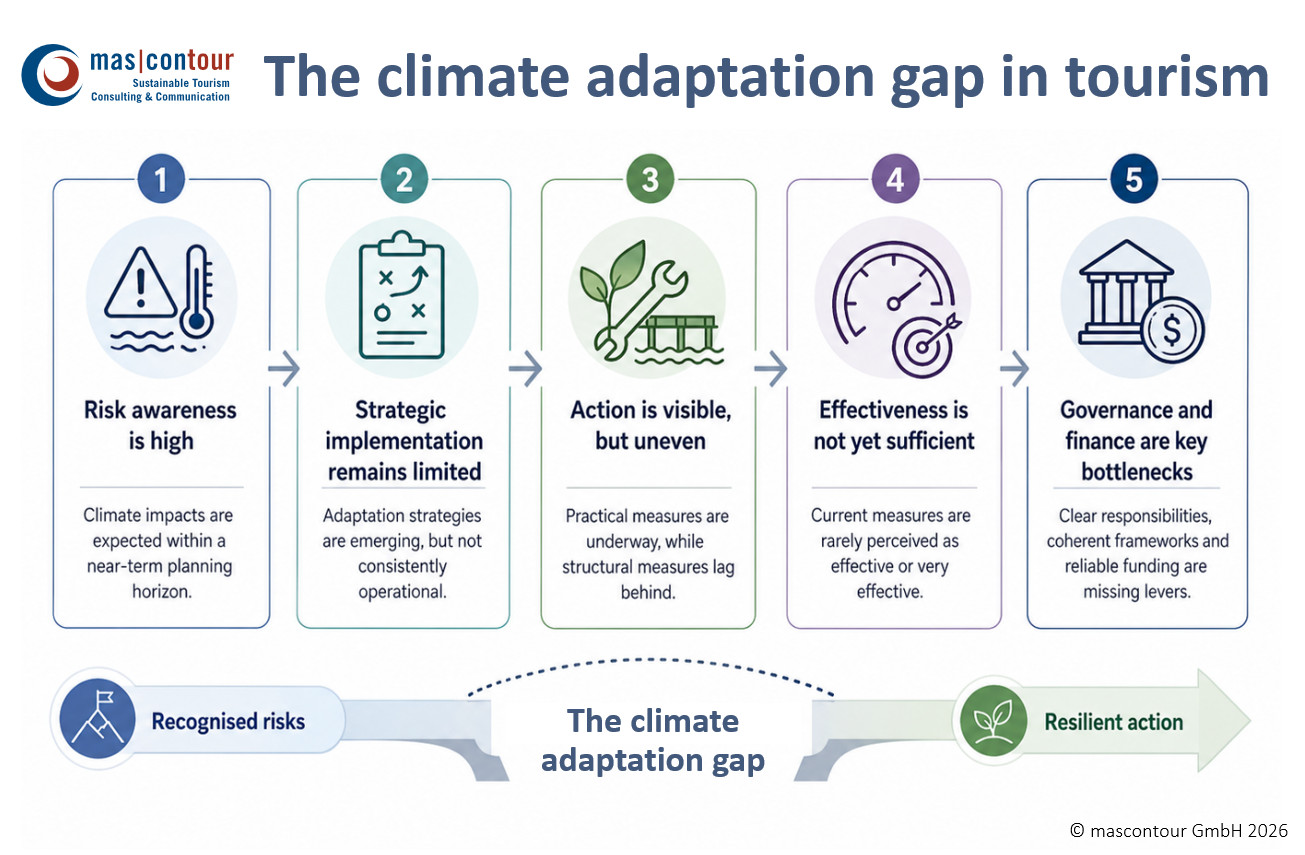
Climate Adaptation in Tourism: New Global White Paper Reveals the Tourism Sector’s Adaptation Gap
- Categories
- Coastal, maritime and inland water tourism Cultural tourism Ecotourism +64 more