

Legislation
28 July 2026
Commission adopts EU strategy for resilient livestock systems
Legislation
28 July 2026
Login / create an account to be able to react
-
11
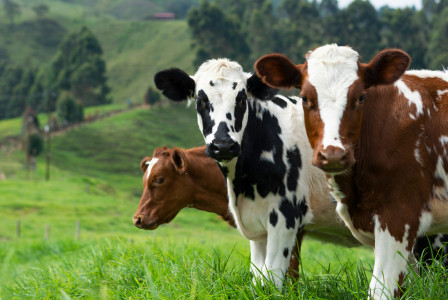
The European Commission adopted the EU Livestock Strategy on 7 July 2026 to guide the sector’s long-term resilience, competitiveness and sustainability. It sets out actions on risk management, animal health, climate performance, nutrient circulation, regional diversity and market value creation. The strategy is relevant for authorities, farmers, researchers and businesses across the EU livestock chain.
European Commission
Topics
EU-27
Academic / Research and VET Institutions
Company with 250 or more employees
EU Institutions
Industry Associations and Chambers of Commerce
National authorities
Regional Authorities
SMEs (a company with less than 250 employees)
-
CoC aspirational objectives
-
-
3. A climate - neutral food chain in Europe by 2050
-
4. An optimised circular and resource-efficient food chain in Europe
-
5. Sustained, inclusive and sustainable economic growth, employment and decent work for all
-
Share
On 7 July 2026, the European Commission adopted the EU Livestock Strategy, a policy framework to strengthen the resilience, competitiveness and sustainability of livestock farming across the Union. The strategy sets five priorities covering crisis preparedness, competitiveness, sustainable production, territorial diversity and value creation. Proposed actions include a livestock risk-management financial scheme, support for disease prevention and control, a harmonised EU methodology to measure livestock emissions at farm level, an on-farm Sustainability Compass, a Livestock Platform for proven solutions, and a roadmap for more efficient nutrient circulation. With livestock accounting for 40% of EU agricultural added value, €400 billion annual turnover, 7 million jobs and 4 million farms, the strategy has direct relevance for stakeholders working on climate action, circularity, rural vitality and food system resilience in the EU.
Find the document here.
#ClimateNeutralFoodChain #SustainableFarming #FoodSystemResilience #CircularFoodChain #AgriFoodSMEs #StrategicAutonomyFood
Comments (0)
See also
Guidelines for sustainability agreements in agriculture
- Categories
- 2. Prevention and reduction of food loss and waste 3. A climate - neutral food chain in Europe by 2050 4. An optimised circular and resource-efficient food chain in Europe +3 more
De Minimis Regulation
- Categories
- 2. Prevention and reduction of food loss and waste 3. A climate - neutral food chain in Europe by 2050 4. An optimised circular and resource-efficient food chain in Europe +3 more
Guidelines on horizontal cooperation agreements
- Categories
- 2. Prevention and reduction of food loss and waste 3. A climate - neutral food chain in Europe by 2050 4. An optimised circular and resource-efficient food chain in Europe +3 more