

Policy
10 November 2026
WHO consults on draft food profiling model for regulatory measures
Policy
10 November 2026
Login / create an account to be able to react
-
63
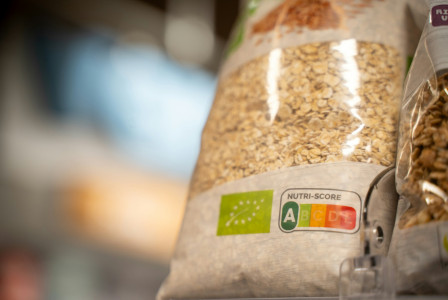
WHO has opened a public consultation, running until 27 November 2026, on a draft integrated food profiling model. The model is meant to help governments decide which industrially produced, pre-packaged foods fall within the scope of measures such as marketing restrictions, front-of-pack labelling, fiscal measures and public procurement. Food manufacturers, retailers and public authorities can comment on how practical the criteria are across different regulatory contexts.
Editorial team
World Health Organization
Topics
EU-27
Academic / Research and VET Institutions
Company with 250 or more employees
Consumer Organisations
Industry Associations and Chambers of Commerce
International Organisations
National authorities
SMEs (a company with less than 250 employees)
-
Agri-food strategic objectives
-
-
Healthy and sustainable diets
-
Share
The draft consolidates earlier WHO work, including regional nutrient profile models, sodium benchmarks and recommendations on trans-fatty acids, into one approach for regulatory use. It combines nutrient criteria for saturated fatty acids, trans-fatty acids, sugars and sodium with the presence of ingredients used mainly for sensory purposes, namely flavours, colours and sweeteners. A product is identified if it exceeds one or more nutrient criteria or contains one or more of these ingredients. WHO states that including these ingredients does not imply they are unsafe; they serve to identify products formulated to increase appeal and consumption. The draft also explains how to move from classification to regulation, covering labelling information, legal coherence, monitoring and governance.
WHO invites comments from Member States, experts, civil society, academia and other stakeholders. It asks in particular about the clarity of the criteria, whether the model can be applied using nutrition declarations and ingredient lists, the guidance on regulatory application, and any missing evidence. Views on the approach may differ among public health bodies, consumer organisations and food producers, and the consultation is the channel through which these perspectives can feed into the final publication. Comments are accepted only through the online form until 27 November 2026 at 23:59 CET, and they must be accompanied by a signed declaration of interest.
#HealthyDietsEU #FoodAdditives
Comments (0)
Connected Partnership Opportunities
See also
European Biotech Act
- Categories
- Food loss and waste A climate – neutral food chain Circular and resource-efficient food chain +3 more
2030 Consumer Agenda
- Categories
- Food loss and waste A climate – neutral food chain Circular and resource-efficient food chain +3 more
Bioeconomy strategy
- Categories
- Food loss and waste A climate – neutral food chain Circular and resource-efficient food chain +3 more