

Publications
03 July 2026
Commission study outlines key pathways to strengthen EU farm resilience
Publications
03 July 2026
Login / create an account to be able to react
-
19
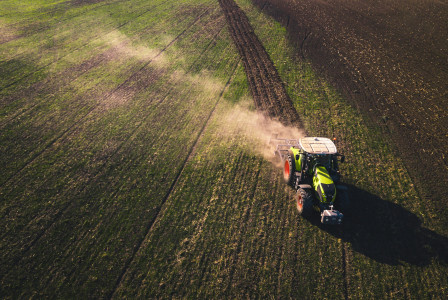
A new European Commission study shows how climate change, labour shortages, and economic pressures are reshaping farming systems across the EU. Based on case studies from eleven Member States, it identifies practical adaptation pathways and highlights the role of policy support in strengthening resilience.
European Commission
Topics
Albania
Armenia
Austria
Belgium
Bosnia and Herzegovina
Bulgaria
Croatia
Cyprus
Czechia
Denmark
Estonia
EU-27
Finland
France
Georgia
Germany
Greece
Hungary
Iceland
Ireland
Italy
Kosovo
Latvia
Liechtenstein
Lithuania
Luxembourg
Malta
Moldova
Montenegro
Netherlands
North Macedonia
Norway
Poland
Portugal
Romania
Serbia
Slovakia
Slovenia
Spain
Sweden
Switzerland
Türkiye
Ukraine
Other
Academic / Research and VET Institutions
Business Support Organisation
Company with 250 or more employees
Cluster Organisations
Consumer Organisations
Cultural and Heritage Organisations
Destination Management & Marketing Organisations
EU Institutions
Financial Institutions and Investors
Industry Associations and Chambers of Commerce
International Organisations
Local Authorities
Media / Journalist Organisations
National authorities
Networks and Federations / Confederations
NGOs / Non-profits
Notified Bodies
Regional Authorities
SMEs (a company with less than 250 employees)
Social Economy Entity
Trade Unions
Other
-
Agri-food strategic objectives
-
-
Food loss and waste
-
Circular and resource-efficient food chain
-
Sustainable economic growth and employment
-
Share
The European Commission has published a new study examining how farming systems across the EU are adapting to climate pressure, demographic change, and evolving economic conditions. Based on fifteen case studies in eleven Member States, the analysis explores the effects of these trends on farm income, resilience, and long-term viability.
The study confirms climate change as the main driver of adaptation, with farmers responding through improved water management, changes in cultivation practices, and shifts in crop choices. It also points to labour shortages and generational renewal as growing structural challenges, particularly in sectors that depend heavily on skilled and stable workforces.
The findings underline the importance of targeted CAP support, innovation, and better local coordination in helping farmers manage change. They also provide useful evidence for shaping future policy tools aimed at building a more resilient, competitive, and sustainable agricultural sector.
#EUAgriculture #FarmResilience #ClimateAdaptation #CAP #SustainableFarming #RuralDevelopment #AgriculturalPolicy
Comments (0)
Connected Partnership Opportunities
See also

Neglected and Underutilised Species (NUS): Potential for Food and Nutrition Security – a Knowledge Review
- Categories
- Food loss and waste A climate – neutral food chain Circular and resource-efficient food chain +3 more

JOINT FAO/WHO EXPERT COMMITTEE ON FOOD ADDITIVES
- Categories
- Food loss and waste A climate – neutral food chain Circular and resource-efficient food chain +3 more

EU Common Fisheries Policy: A Decade of Mixed Results on Sustainability and Economic Performance
- Categories
- Food loss and waste A climate – neutral food chain Circular and resource-efficient food chain +3 more