

Publications
15 July 2026
EU farm markets stay resilient amid rising costs and uncertainty
Publications
15 July 2026
Login / create an account to be able to react
-
35
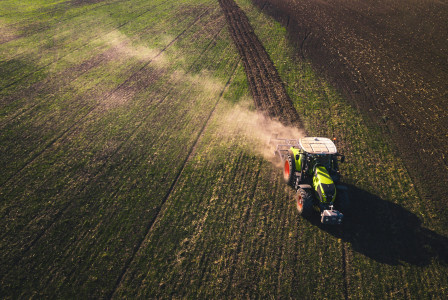
The European Commission’s summer 2026 outlook says EU agricultural markets remain resilient despite geopolitical tensions, weather risks, animal diseases, and higher input costs. While some sectors are expected to grow, pressure on farm margins and continued uncertainty remain major concerns.
European Commission - DG AGRI
Topics
Albania
Armenia
Austria
Belgium
Bosnia and Herzegovina
Bulgaria
Croatia
Cyprus
Czechia
Denmark
Estonia
EU-27
Finland
France
Georgia
Germany
Greece
Hungary
Iceland
Ireland
Italy
Kosovo
Latvia
Liechtenstein
Lithuania
Luxembourg
Malta
Moldova
Montenegro
Netherlands
North Macedonia
Norway
Poland
Portugal
Romania
Serbia
Slovakia
Slovenia
Spain
Sweden
Switzerland
Türkiye
Ukraine
Other
Academic / Research and VET Institutions
Company with 250 or more employees
EU Institutions
Financial Institutions and Investors
Industry Associations and Chambers of Commerce
Local Authorities
National authorities
Networks and Federations / Confederations
NGOs / Non-profits
Regional Authorities
SMEs (a company with less than 250 employees)
-
Agri-food strategic objectives
-
-
Sustainable economic growth and employment
-
Sustainable food supply chain
-
Sustainable sourcing
-
Share
The European Commission’s latest short-term outlook shows that EU agriculture remains broadly resilient in 2026, even as the sector faces rising input costs and growing uncertainty. The conflict in the Middle East, trade tensions, animal diseases, and weather-related risks are all adding pressure to agricultural markets, while higher energy and fertiliser costs continue to weigh on producer margins. The report also notes that it does not yet reflect the impact of the ongoing heatwaves affecting farmers across Europe.
Economic conditions remain difficult, with EU GDP growth forecast at 1.1% and inflation expected to reach 3.1%, mainly because of energy prices. Food prices are also likely to rise as higher production costs move through the supply chain. Although the outlook assumes a gradual normalisation of energy markets, the Commission warns that risks remain on the downside and that fertiliser affordability has fallen back to levels last seen in 2022.
Sector forecasts are mixed. EU cereal production in 2026/27 is expected to reach 273.7 million tonnes, close to the five-year average, while oilseeds production is forecast to rise by 3.1%. Dairy output is expected to grow, and pigmeat and poultry production should remain stable or increase. By contrast, beef, sheep and goat meat, sugar, and olive oil production are expected to decline. Overall, the report presents a stable but cautious outlook for EU agricultural markets.
#EUAgriculture #AgriMarkets #FarmEconomy #FoodProduction #AgriculturalOutlook
Comments (0)
Connected Partnership Opportunities
See also

Neglected and Underutilised Species (NUS): Potential for Food and Nutrition Security – a Knowledge Review
- Categories
- Food loss and waste A climate – neutral food chain Circular and resource-efficient food chain +3 more

JOINT FAO/WHO EXPERT COMMITTEE ON FOOD ADDITIVES
- Categories
- Food loss and waste A climate – neutral food chain Circular and resource-efficient food chain +3 more

EU Common Fisheries Policy: A Decade of Mixed Results on Sustainability and Economic Performance
- Categories
- Food loss and waste A climate – neutral food chain Circular and resource-efficient food chain +3 more