
Green transition
06 November 2026
Commission Presents New EU Framework to Strengthen Climate Resilience
Green transition
06 November 2026
Login / create an account to be able to react
-
4
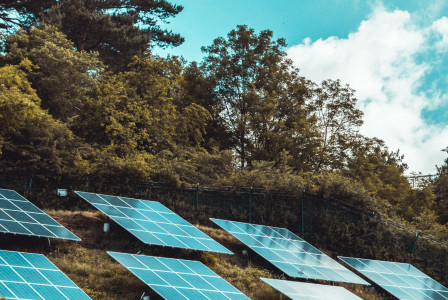
The European Commission has presented a new EU Framework for Climate Resilience aimed at strengthening Europe's ability to anticipate, prepare for and manage growing climate risks. It introduces new climate-risk planning requirements and digital tools that can support better-informed investment and development decision.
European Commission
Topics
EU-27
Academic / Research and VET Institutions
Business Support Organisation
Company with 250 or more employees
EU Institutions
Financial Institutions and Investors
Industry Associations and Chambers of Commerce
International Organisations
Local Authorities
National authorities
Networks and Federations / Confederations
NGOs / Non-profits
Notified Bodies
Regional Authorities
SMEs (a company with less than 250 employees)
Social Economy Entity
Trade Unions
Other
-
Focus Areas
-
-
Towards a fair and safe built environment
-
Share
Presented on 27 October, the EU Framework for Climate Resilience responds to the increasing economic and social impacts of climate change across Europe. According to FIEC, heatwaves alone caused an estimated €113 billion in damage during the preceding summer, while private insurance currently covers only around a quarter of climate-related damage.
The framework focuses on stronger climate-risk planning and better tools for decision-makers. Of particular relevance to construction and infrastructure investment is the new European Climate Viewer, which will enable users to visualise local impacts under warming scenarios of 1.5°C by 2030, 2°C by 2050 and 3°C by 2100. Such climate-risk information can provide a useful basis for decisions on where and how to invest in more resilient buildings and infrastructure. The framework also foresees national climate resilience strategic plans, through which Member States will identify the public authorities responsible for preventing and managing climate risks, to be prepared by the end of 2030.
Comments (0)
Related content

Connected Partnership Opportunities
See also

SET Plan Progress Report 2025
- Categories
- Skills and talent Regulatory framework Research, Innovation, Technology +2 more

EU Delegated Regulation on Life-Cycle Global Warming Potential of New Buildings
- Categories
- Skills and talent Regulatory framework Research, Innovation, Technology +2 more

Implementing the Energy Performance of Buildings Directive Across Europe
- Categories
- Towards a fair and safe built environment