

Best practices
22 October 2026
Digitalising workwear sizing with AI: the case of Grassi and SizeYou
Best practices
22 October 2026
Login / create an account to be able to react
-
20
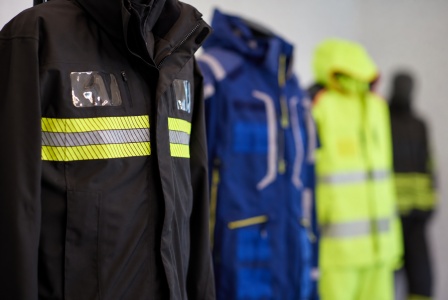
Clothing sizing has traditionally relied on manual measurement. The cooperation between Grassi 1925, a long-established manufacturer of technical clothing, and I-Deal, an innovative SME specialised in software development, provides a practical example of how an AI-based smartphone app can make the process faster, reliable and possible remotely.
Grassi S.p.A.
Topics
Italy
Company with 250 or more employees
-
Transition Pathway's building blocks
-
-
Ecosystem's readiness to support EU strategic autonomy and defence efforts
-
R&I, techniques and technological solutions
-
Sustainable competitiveness
-
-
Industrial ecosystems
-
-
Textile
-
-
Textiles ecosystem areas
-
-
Apparel and clothing accessories
-
Technical textiles
-
Share
AI adoption in textile industry processes
Digital technologies are being introduced across the textile value chain, from design to quality control. Artificial intelligence is part of this shift, although its adoption remains limited: in 2024, only 6% of EU textile and apparel enterprises used AI, compared with 13.5% of all EU enterprises.1 Despite this limited uptake, AI offers opportunities to improve efficiency particularly in processes that traditionally rely on manual, time-consuming procedures. One such example is the clothing sizing phase. Improving this process is especially relevant in the segment of workwear, uniforms and protective clothing, where garments are often supplied to large workforces and proper fit is essential for comfort, performance and safety.
Grassi, a workwear manufacturer with a century of history
Grassi S.p.A., also known as Grassi 1925, is an Italian manufacturer of protective workwear and customised uniforms. Founded in 1925, it is headquartered near Varese. Research and development, design, pattern-making, quality control and logistics are concentrated there, while production is spread across eight company-owned sites in Romania, Albania and Tunisia. In 2025, as reported by the company, it had a turnover of around EUR 70 million and more than 1,100 employees. It produces around two million garments a year for public and private clients in sectors such as transport, firefighting, law enforcement and defence. Its innovation activity includes new materials and fabrics and smart textile solutions designed to improve safety, comfort and fit.
Digitalising the sizing phase: the partnership with I-Deal
Large uniform contracts involve supplying each worker with a kit of up to 20 garments. Sizing was traditionally carried out by Grassi through on-site fitting sessions at the client’s premises, with each item tried on individually. For organisations with thousands of workers across multiple locations, this phase could extend over several weeks per contract. To simplify this step, in 2020 Grassi invested in AI-based solutions for the sizing phase, entering into an exclusive partnership with I-Deal, an Italian SME which develops body-measurement technology and has taken part in EU-funded research projects (for example MORPHEOS). The collaboration focused on SizeYou, an app that calculates body measurements from two photographs, one from behind and one from the side, analysed by AI. With the app, measurement no longer requires on-site fitting sessions: each worker receives a personal QR code, the two photographs are taken at home with an ordinary smartphone, and the resulting sizes are transmitted to Grassi through a back-office platform.
The adoption of SizeYou at Grassi was based on close cooperation between the two companies, with Grassi acting as a development partner rather than solely as an end user. During the initial deployment phase, I-Deal calibrated the algorithm using manual reference measurements collected by Grassi staff. Grassi also supplied the size charts for its garment range, enabling the app to convert body measurements directly into the appropriate size for each item. This co-development adapted SizeYou to Grassi’s product range while improving the app’s accuracy for its wider user base.
The benefits of using AI software in the sizing process
The use of SizeYou has made sizing faster at Grassi: in uniform programmes, measurement with the app takes less than three minutes per worker, compared with about 20 minutes for fitting a full kit, a reduction of about 85%.2 The process is also simpler to organise, as Grassi staff no longer travel to client sites and workers no longer need time off duty for fittings. In addition, as results are stored in the back-office platform, garments can be re-ordered without new measurements.
The sizes assigned are also more consistent. With traditional on-site fittings, sizes depended on the judgement of the staff involved, whereas the app applies the same method to every worker. As reported by the company, across 1,162 size assignments carried out between 2021 and 2025, 96.2% of the sizes calculated by the app proved correct, while 3.8% had to be changed because of measurement errors, as verified when the garments were tried on.2 The accuracy of the method has been assessed in a preliminary validation study by the University of Padua.3
Finally, the exclusion of facial images and the identification of workers by code alone ensure privacy protection, an aspect of particular relevance for security and defence organisations.
Conclusion
The Grassi case illustrates how cooperation between an established manufacturer and a technology SME can bring AI into a traditionally manual step of workwear supply, a segment that equips essential services such as law enforcement, firefighting and defence. The co-development process combined I-Deal’s development of the technology with Grassi’s provision of field data and garment specifications for its refinement. The outcome is greater speed and consistency in sizing, with benefits for both the supplier and its clients.
1Source: OECD (2025), Progress in Implementing the European Union Coordinated Plan on Artificial Intelligence, based on Eurostat data.
2Source: I-Deal S.r.l., SizeYou – Grassi S.p.A. Case study (2021–2025), field data on 1,162 size assignments.
3Source: University of Padua (2022), Assessment of anthropometric measures from a commercial scanning mobile application: a preliminary validation study
Comments (0)
Connected Partnership Opportunities
See also
The role of trade fairs in supporting an ecosystem approach: the case of Textiles Recycling Expo
- Categories
- Infrastructure Investments and funding R&I, techniques and technological solutions +11 more

Leveraging collective action to decarbonise supply chains: the Carbon Reduction Initiative of the European Outdoor Group
- Categories
- Infrastructure Investments and funding R&I, techniques and technological solutions +11 more

Protection through innovation: EU strategic autonomy and the case of Sioen
- Categories
- R&I, techniques and technological solutions Sustainable competitiveness Aerospace and defence +3 more