

Best practices
23 October 2026
From European textile research to certified medical devices: the ITV Denkendorf Produktservice model
Best practices
23 October 2026
Login / create an account to be able to react
-
9
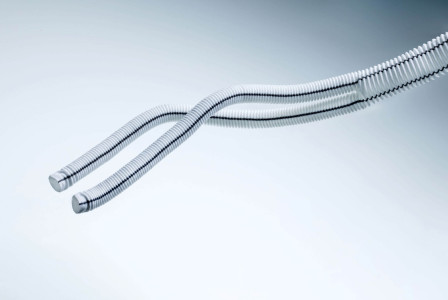
Bringing new medical textiles to market calls for both research and certified production, and collaboration between research and industry can help turn innovations into market-ready products. In Germany, DITF, the German Institutes of Textile and Fiber Research, have combined the two through their own production company, ITV Denkendorf Produktservice (ITVP), which develops and produces textile-based medical devices such as implants.
ITV Denkendorf Produktservice
Topics
Germany
SMEs (a company with less than 250 employees)
-
Transition Pathway's building blocks
-
-
Ecosystem's readiness to support EU strategic autonomy and defence efforts
-
R&I, techniques and technological solutions
-
Sustainable competitiveness
-
-
Industrial ecosystems
-
-
Textile
-
-
Textiles ecosystem areas
-
-
Technical textiles
-
Research and Innovation
-
Share
Medical textiles: an essential segment requiring research and certification
From wound dressings to implants, medical textiles are vital to maintaining essential services in Europe. Healthcare is also one of the main application areas for EU textile production, beyond fashion and home furnishing.1 In medical textiles, product development can involve the whole chain, from polymers and fibres to textile structures, often calling for sustained research and innovation. Certification is equally central, and has become even more important since 2021, when the Medical Device Regulation (EU) 2017/745 raised standards for clinical evidence and technical documentation.
A production company born from a textile research centre
ITV Denkendorf Produktservice GmbH (ITVP) provides certified production capacity for textile-based medical devices, working for medical device companies. The company has its roots in the Biomedical Engineering Department of the German Institutes of Textile and Fiber Research (DITF), one of the largest textile research centres in Europe. The department, which develops textile-based implants and the intermediate products used to make them, had brought numerous projects into production, and over time orders grew beyond what the research institute could handle. In 2001, DITF therefore founded ITVP as a subsidiary,2 based on the institute’s own site in Denkendorf, Baden-Württemberg.
Today, ITVP employs around 40 people3, on a production area of about 2,000 square metres, including some 1,200 square metres of cleanrooms. Working under an EN ISO 13485-certified quality management system, it covers the whole chain, from resorbable polymers and fibres to woven, knitted, braided and nonwoven structures, films and membranes. Products include near-finished devices, such as sutures, hernia meshes and vascular prostheses, which are then sterilised and marketed by customers under their own brands.
A two-way link between public research and certified production
ITVP’s competitiveness builds, among other factors, on its close relationship with DITF, which has worked on textile-based medical products for around 40 years. Their shared location and close organisational relationship facilitate the transfer of research results from DITF into ITVP’s certified production facilities. This allows the two organisations to combine research expertise with the capabilities needed to manufacture medical textile products on an industrial scale.
Value also flows in the opposite direction. Part of ITVP’s revenue is reinvested into DITF’s research and, additionally, the company occasionally commissions product tests from the DITF testing laboratories.4
Knot-free barbed sutures illustrate this path from research to production. Developed with DITF’s Biomedical Engineering Department and then produced at ITVP, they are made from a single synthetic monofilament using special cutting technologies to achieve unique barb shapes. Used for wound closure as well as in cosmetic surgery, these sutures have been produced in Denkendorf.
Conclusion
Over 25 years, ITVP has provided DITF’s biomedical engineering research and its own development activities with a certified production route for textile-based medical devices. The two organisations share a site and work closely together: research results from the institute are taken into production at ITVP, and part of ITVP’s revenue is reinvested into DITF's research. This model has helped DITF bring textile innovations in the medical field to industrial scale while meeting market and regulatory requirements.
1Source: European Commission: Directorate-General for Internal Market, Industry, Entrepreneurship and SMEs and CSIL (2021). Data on the EU textile ecosystem and its competitiveness – Final report. Among the four application areas examined (agriculture, construction, automotive and healthcare), healthcare ranks second in terms of EU production. In the study, healthcare is considered in a broad sense, including hygiene articles.
2Source: DITF (2026). 25 Years of medical devices: ITVP combines experience with innovation.
3Source: Orbis database, Bureau van Dijk / Moody’s Analytics.
4Source: Textile Network (2019). Closing the gap and avoiding the ‘valley of death’.
Comments (0)
Connected Partnership Opportunities
See also
The role of trade fairs in supporting an ecosystem approach: the case of Textiles Recycling Expo
- Categories
- Infrastructure Investments and funding R&I, techniques and technological solutions +11 more

Textile waste as a resource: RETEX’s path towards technical materials
- Categories
- R&I, techniques and technological solutions Sustainable competitiveness Construction +5 more

Leveraging collective action to decarbonise supply chains: the Carbon Reduction Initiative of the European Outdoor Group
- Categories
- Infrastructure Investments and funding R&I, techniques and technological solutions +11 more