

News
28 July 2026
A solvent-free route to high-performance silk materials: the study from Imperial College
News
28 July 2026
Login / create an account to be able to react
-
21
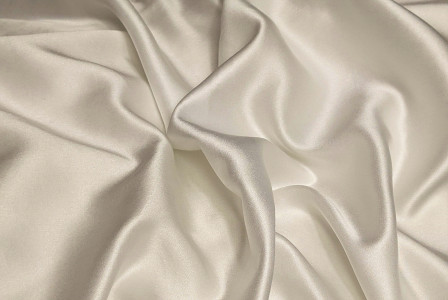
Researchers at Imperial College London have developed a solvent-free process that transforms natural silk into high-performance materials with enhanced strength and durability. The study demonstrates how innovative processing techniques can expand the applications of natural fibres while reducing reliance on chemical treatments.
Imperial College London
Topics
Albania
Armenia
Austria
Belgium
Bosnia and Herzegovina
Bulgaria
Croatia
Cyprus
Czechia
Denmark
Estonia
EU-27
Finland
France
Georgia
Germany
Greece
Hungary
Iceland
Ireland
Italy
Kosovo
Latvia
Liechtenstein
Lithuania
Luxembourg
Malta
Moldova
Montenegro
Netherlands
North Macedonia
Norway
Poland
Portugal
Romania
Serbia
Slovakia
Slovenia
Spain
Sweden
Switzerland
Türkiye
Ukraine
Other
Academic / Research and VET Institutions
-
Transition Pathway's building blocks
-
-
R&I, techniques and technological solutions
-
Sustainable competitiveness
-
-
Industrial ecosystems
-
-
Textile
-
-
Textiles ecosystem areas
-
-
Technical textiles
-
Share
Natural silk has long been valued for its unique combination of strength, flexibility and lightweight properties. Building on these characteristics, researchers at Imperial College London have developed an innovative solvent-free process that enables silk fibres to be transformed into high-performance materials without the use of conventional chemical treatments. The research, published in Nature Sustainability, offers a new approach to manufacturing advanced bio-based materials while preserving the natural qualities of silk.
Traditional methods for producing regenerated silk materials often require chemical solvents to dissolve and reshape the fibres before they can be processed into new products. The technique developed by the Imperial-led research team instead relies on carefully controlled heat and pressure to fuse natural silk fibres directly. By avoiding solvent-based processing, the method simplifies manufacturing while maintaining the structural integrity and mechanical performance of the original material.
Laboratory testing demonstrated that the resulting silk materials exhibit high strength, durability and resistance to damage, making them suitable for demanding applications beyond conventional textiles. Potential uses include lightweight engineering components, protective equipment, medical devices and other products where strong yet renewable materials are increasingly sought after.
The research also highlights the broader potential of natural fibres within advanced manufacturing. As industries continue to explore alternatives to resource-intensive synthetic materials, innovations that improve the performance of bio-based fibres can support the development of products with lower environmental impacts while maintaining high technical standards.
Although further work is needed to scale up the technology for industrial production, the study represents an important contribution to materials science. By combining natural fibre performance with a simplified manufacturing process, the researchers demonstrate how innovation can unlock new opportunities for renewable materials across multiple sectors, reinforcing silk's position as a versatile material for future high-performance applications.
Comments (0)
Connected Partnership Opportunities
See also

European Commission launches ‘Call for Evidence on Advanced Materials Act’
- Categories
- Investments and funding R&I, techniques and technological solutions Sustainable competitiveness +10 more
EU spotlights global circular economy at Osaka World Expo
- Categories
- Infrastructure Investments and funding R&I, techniques and technological solutions +20 more

Biopolymers seminar highlights regulatory and innovation trends in sustainable materials
- Categories
- Sustainable competitiveness Regulation and public governance Agri-food +5 more