

Articles
16 February 2026
Data to Policy: Using Data Effectively & Europe’s Sustainable Strategy
Articles
16 February 2026
Login / create an account to be able to react
-
339
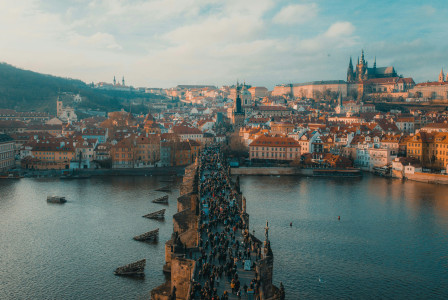
Across Europe, tourism generates extraordinary amounts of information—figures on arrivals, mobility, spending patterns, visitor flows, environmental pressures, and even shifts in traveller behaviour shaped by global media trends. But having data and using it effectively are two different things, and this year’s European Tourism Day made that distinction sharper than ever. Stakeholders agreed that Europe has reached a turning point: the era of collecting data for reporting’s sake is ending, and the era of turning data into meaningful policy action has begun.
European Commission
Topics
Albania
Armenia
Austria
Belgium
Bosnia and Herzegovina
Bulgaria
Croatia
Cyprus
Czechia
Denmark
Estonia
EU-27
Finland
France
Georgia
Germany
Greece
Hungary
Iceland
Ireland
Italy
Kosovo
Latvia
Liechtenstein
Lithuania
Luxembourg
Malta
Moldova
Montenegro
Netherlands
North Macedonia
Norway
Poland
Portugal
Romania
Serbia
Slovakia
Slovenia
Spain
Sweden
Switzerland
Türkiye
Ukraine
Other
Academic / Research and VET Institutions
Business Support Organisation
Company with 250 or more employees
Cluster Organisations
Consumer Organisations
Cultural and Heritage Organisations
Destination Management & Marketing Organisations
EU Institutions
Financial Institutions and Investors
Industry Associations and Chambers of Commerce
International Organisations
Local Authorities
Media / Journalist Organisations
National authorities
Networks and Federations / Confederations
NGOs / Non-profits
Notified Bodies
Regional Authorities
SMEs (a company with less than 250 employees)
Social Economy Entity
Trade Unions
Other
-
Specific types of tourism
-
-
Adventure tourism
-
Coastal, maritime and inland water tourism
-
Cultural tourism
-
Ecotourism
-
Education tourism
-
Festival tourism
-
Gastronomy tourism
-
Health and medical tourism
-
MICE tourism
-
Mountain tourism
-
Religious tourism
-
Rural tourism
-
Sports tourism
-
Urban/city tourism
-
Wellness tourism
-
-
Transition Pathway Strategic Areas
-
-
Digitalisation of tourism SMEs and destinations
-
Funding and support measures
-
Governance of tourism destinations
-
Improving statistics and indicators
-
Multimodal travelling
-
Sustainable mobility
-
Tools for data on tourism
-
Tourism strategies
-
Well-being of residents
-
-
Business activities
-
-
Activities of amusement parks and theme parks
-
Activities of associations and other organisations supporting tourism
-
Air passenger transport
-
Camping grounds, recreational vehicle parks and trailer parks
-
Events catering and other food services
-
Festivals, cultural and entertainment activities
-
Gardens and nature reserves activities
-
Holiday Housing / Apartments and other short stay accommodation
-
Hotel and similar accommodation
-
Mobile beverage services
-
Mobile food services
-
Museums
-
Operation of historical sites
-
Other
-
Other accommodation
-
Other amusement and recreation activities
-
Other food and beverage services
-
Other holiday reservation services
-
Other tourism transportation activities
-
Rail Passenger transport
-
Recreational and sport activities
-
Restaurants, cafes and bars (Food and Beverage serving activities)
-
Road passenger transport
-
Tour operator activities
-
Travel agency activities
-
Water (sea, coastal and inland) passenger transport
-
Share
From Information to Impact
The conversations around data revealed a sector eager to move beyond the basics. Tourism authorities, businesses, and researchers now want to understand not only what is happening, but why—and how that insight can shape better policies. Yet they face familiar challenges: fragmented datasets, unclear ownership, patchy digitisation, and strict compliance demands in handling personal information. Many destinations still operate with tools that can’t keep up with the complexity of modern mobility, while smaller businesses often struggle with the technical requirements of data management.
Despite these hurdles, the ambition is clear. Data—when accessible, comparable, and properly digitised—can inform decisions that benefit both visitors and communities. It reveals the real economic footprint of tourism, from the central role played by SMEs to the sector’s unusually balanced labour profile, where gender parity and cross‑age employment are notable strengths. It also helps destinations understand how specific interventions, such as redesigning public spaces or adjusting transport flows, ripple through local economies. The message came through repeatedly: data only becomes powerful when there is a coherent strategy guiding its interpretation and use.
Anchoring Data in Europe’s Strategic Priorities
This push for meaningful data use aligns closely with Europe’s broader tourism vision. The EU’s forthcoming Sustainable Tourism Strategy recognises tourism as a strategic industry representing around ten percent of Europe’s GDP, essential not only for major hubs but also for remote, island, and rural communities. Yet the sector sits at a crossroads—faced with labour shortages, rising environmental pressures, and global competition for talent and investment.
Europe’s response is to steer tourism toward a model that combines competitiveness with long‑term sustainability. That means strengthening rail and multimodal mobility so travellers can plan cleaner, simpler journeys; preparing the 2026 updates to transport and passenger rights legislation to improve how people move across borders; and investing in skills and training to make tourism careers more attractive. Each of these priorities relies on robust, usable data: understanding travel patterns, identifying pressure points, and ensuring infrastructure investments match real demand.
Data becomes the thread that connects Europe’s ambitions to its policies—whether the goal is to tackle overcrowding in major cities or to distribute visitors more evenly across lesser‑known regions.
When Data Shapes Real‑World Decisions
One of the most compelling illustrations of this shift came from Dubrovnik. For years, the city faced overwhelming visitor numbers and growing tensions with residents. Its turnaround was not driven by slogans but by evidence: people‑counting systems to track flows, strict cruise‑ship caps informed by impact assessments, a mandatory pre‑booking system to manage timing, and AI‑assisted crowd prediction to prevent congestion before it happens. The result is a more balanced city that welcomes visitors while restoring quality of life for locals, showing how political will combined with good data can deliver tangible change.
Other speakers emphasised that Europe must adopt this practical mindset more broadly. Strategic alliances between Member States, shared KPIs, and steady funding are necessary to bring national and regional efforts into alignment. Better interoperability of data—data that is measurable, compatible, and accessible—will help cities and countries learn from one another rather than reinvent solutions individually.
They also highlighted gaps Europe still needs to address: ensuring a fair playing field between local operators and major global platforms; improving enforceable passenger rights for multimodal journeys; and advancing debates on VAT fairness that directly affect competitiveness. And at the heart of these issues lies an increasingly urgent challenge: the need to confront unbalanced tourism flows early, before they turn into full‑scale social and political tensions.
From Data to Policy, From Policy to Action
The story emerging from European Tourism Day is one of evolution. Europe is no longer asking merely how to gather more data, but how to use it to design smarter, fairer, and more resilient tourism policies. The focus is shifting to impact—impact on residents, on natural sites, on infrastructure, on accessibility, and on the overall experience of travelling through Europe.
Data will not fix every challenge on its own, but it can guide decisions that ground Europe’s tourism future in evidence rather than assumptions. As the EU prepares to roll out its new sustainable tourism strategy, the task ahead is clear: turn fragmented insights into coordinated action, and transform raw information into policies that strengthen competitiveness while safeguarding Europe’s cultural, social, and environmental heritage.
In this vision, data is not just a resource. It is the bridge between Europe’s present realities and its long‑term ambitions—and the tool that can turn those ambitions into measurable progress.
Comments (0)
Related content

Connected Partnership Opportunities
See also
People of the Platform: putting skills, resilience and inclusion at the heart of tourism’s next chapter
- Categories
- Coastal, maritime and inland water tourism Cultural tourism Ecotourism +64 more

Green Transition: the Economic Strategy for Tourism
- Categories
- Coastal, maritime and inland water tourism Cultural tourism Ecotourism +64 more
Destination Europe & Ukraine: Closing Messages
- Categories
- Coastal, maritime and inland water tourism Cultural tourism Ecotourism +64 more