

Articles
13 January 2026
People of the Platform: putting skills, resilience and inclusion at the heart of tourism’s next chapter
Articles
13 January 2026
Login / create an account to be able to react
-
<a href="/user/login?destination=/tourism/articles/people-platform-putting-skills-resilience-and-inclusion-heart-tourisms-next%23comment-form">Log in</a> or <a href="/user/register?destination=/tourism/articles/people-platform-putting-skills-resilience-and-inclusion-heart-tourisms-next%23comment-form">register</a> to post comments
-
225
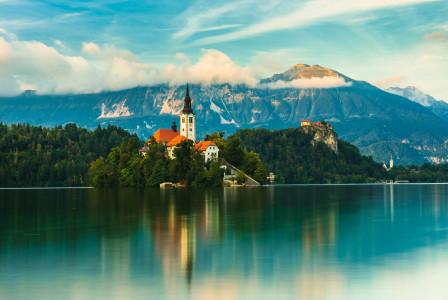
Europe is the world’s leading tourism region, with 47 million international arrivals in 2024 (+1% above 2019 levels and 5% over 2023). It has the heritage, the destinations, the expertise, and the global recognition. Yet leadership in tourism today is no longer just about attracting visitors. It is about shaping a sector that can withstand shocks, share long term prosperity, and keep its promise as a uniquely human industry.
That is where Vanguelis Panayotis — steps in. Invited to contribute to the Transition Pathway for Tourism platform, Vanguelis did not join to comment from the sidelines. He is the Chair of ‘Together for EU Tourism' (T4T), Resilience and Skills & Inclusion Subgroup.
In the new series People of Transition Pathway for Tourism, we shine a light on the individuals driving Europe’s tourism transformation. Each article will introduce the member of the platform’s expert subgroups—those shaping sustainability, digitalisation, inclusion, resilience, and governance. Through their perspectives, challenges, and priorities, this series offers a human lens on strategic work, fostering connection, peer learning, and inspiration across the tourism ecosystem.
Topics
Albania
Armenia
Austria
Belgium
Bosnia and Herzegovina
Bulgaria
Croatia
Cyprus
Czechia
Denmark
Estonia
EU-27
Finland
France
Georgia
Germany
Greece
Hungary
Iceland
Ireland
Italy
Kosovo
Latvia
Liechtenstein
Lithuania
Luxembourg
Malta
Moldova
Montenegro
Netherlands
North Macedonia
Norway
Poland
Portugal
Romania
Serbia
Slovakia
Slovenia
Spain
Sweden
Switzerland
Türkiye
Ukraine
Other
Academic / Research and VET Institutions
Business Support Organisation
Company with 250 or more employees
Cluster Organisations
Consumer Organisations
Cultural and Heritage Organisations
Destination Management & Marketing Organisations
EU Institutions
Financial Institutions and Investors
Industry Associations and Chambers of Commerce
International Organisations
Local Authorities
Media / Journalist Organisations
National authorities
Networks and Federations / Confederations
NGOs / Non-profits
Notified Bodies
Regional Authorities
SMEs (a company with less than 250 employees)
Social Economy Entity
Trade Unions
Other
-
Specific types of tourism
-
-
Adventure tourism
-
Coastal, maritime and inland water tourism
-
Cultural tourism
-
Ecotourism
-
Education tourism
-
Festival tourism
-
Gastronomy tourism
-
Health and medical tourism
-
MICE tourism
-
Mountain tourism
-
Religious tourism
-
Rural tourism
-
Sports tourism
-
Urban/city tourism
-
Wellness tourism
-
-
Transition Pathway Strategic Areas
-
-
Accessible tourism services
-
Best practices, peer learning and networking
-
Changes in tourism demand and opportunities
-
Circularity of tourism services
-
Coordinated information on travelling
-
Cross-border travelling
-
Digitalisation of tourism SMEs and destinations
-
Equal and fair tourism jobs
-
Funding and support measures
-
Governance of tourism destinations
-
Green Transition of Tourism Companies and SMEs
-
Improving formal education
-
Improving statistics and indicators
-
Innovative tourism services
-
Multimodal travelling
-
Online visibility of tourism offer
-
Pact for skills
-
Promoting PEF/OEF methods for tourism
-
R&I on climate-friendly tourism
-
R&I on digital tools for tourism
-
Short-term rentals
-
Skills needs for twin transition
-
Sustainable mobility
-
Tools for data on tourism
-
Tourism strategies
-
Training opportunities
-
Well-being of residents
-
-
Business activities
-
-
Activities of amusement parks and theme parks
-
Activities of associations and other organisations supporting tourism
-
Air passenger transport
-
Camping grounds, recreational vehicle parks and trailer parks
-
Events catering and other food services
-
Festivals, cultural and entertainment activities
-
Gardens and nature reserves activities
-
Holiday Housing / Apartments and other short stay accommodation
-
Hotel and similar accommodation
-
Mobile beverage services
-
Mobile food services
-
Museums
-
Operation of historical sites
-
Other
-
Other accommodation
-
Other amusement and recreation activities
-
Other food and beverage services
-
Other holiday reservation services
-
Other tourism transportation activities
-
Rail Passenger transport
-
Recreational and sport activities
-
Restaurants, cafes and bars (Food and Beverage serving activities)
-
Road passenger transport
-
Tour operator activities
-
Travel agency activities
-
Water (sea, coastal and inland) passenger transport
-
Share
From critique to contribution
The story begins with a simple gap. France—a global tourism heavyweight—was not represented in the group. For Vanguelis, that absence was more than symbolic. It highlighted a broader European challenge: enormous potential, but too little shared direction.
Instead of treating that as someone else’s problem, he chose to act. The invitation became a responsibility: to bring experience to the table, help structure the debate, and translate high-level ideas into something that can actually land on the ground, especially for the businesses that make tourism real.

Why skills, resilience and inclusion belong together
Vanguelis’ work within the platform focuses on a trio that is shaping the future of the sector: skills, resilience, and inclusion.
Resilience is no longer optional. COVID did not only disrupt tourism; it exposed how dependent tourism is on mobility itself. When movement stops, the sector stops. That lesson belongs in every risk assessment and every tourism strategy: future disruptions can happen again, and preparedness is now part of responsible planning.
Inclusion is equally non-negotiable. The task is not to debate whether inclusion matters, but to normalize it through action, spreading best practices and keeping inclusion embedded as a standard expectation rather than a separate initiative.
And then there is skills, which sit at the core of tourism’s identity.
Tourism is capital-intensive (planes, hotels, infrastructure) but it is ultimately a human craft. Service is built through connection: welcoming, listening, guiding, resolving, hosting. In an era of accelerating automation, tourism remains one of the most human-centered parts of the economy. That is not a sentimental claim; it is a strategic advantage. Experiences, authenticity, and genuine interaction are difficult to replicate with machines, and that makes skills development one of tourism’s strongest long-term investments.
The platform’s skills agenda is therefore not only about training people to perform today’s tasks better. It is about preparing an industry that can absorb disruption—and still offer meaningful work, dignity, and opportunity.
A sector at a crossroads: fear, change, and the need for a shared direction
Across Europe, anxiety around change is understandable. Technology is transforming work. Social cohesion is under pressure. Trust in collective solutions can feel fragile. Yet tourism sits at an interesting intersection: it depends on openness, exchange, and mobility, exactly the forces that can soften polarization when handled well.
Vanguelis points to something both challenging and hopeful: the plasticity of the human brain. Our capacity to adapt, learn, and rebuild social norms when the world shifts. The catch is that adaptation does not happen well in isolation. Collective challenges require collective agreement on what the “new normal” should be.
This is where the platform’s role becomes bigger than a technical exercise. It becomes a place to disagree productively, to compare approaches, and to build a consensus strong enough to translate into action.
If optimism is needed, it can be found in a simple reality: change often brings productivity gains. Productivity can create wealth. Europe’s social model, at its best, provides the conditions to share that wealth more fairly; if the political will and coordination follow.
The urgent gap: SMEs need usable pathways, not abstract strategies
A defining feature of Vanguelis’ approach is his insistence on focus: the platform’s work must serve those who struggle most to keep up with rapid transformation.
That means SMEs.
Small and medium-sized enterprises form the backbone of tourism. They also tend to lack the time, staff, and financial buffer to experiment through repeated trial-and-error. When transformation is urgent (digitalisation, sustainability, new regulations, new expectations) SMEs cannot afford three or four mistakes before finding the right path.
So the priority becomes clear: identify practical best practices, validate them, and spread them in a way that saves time and reduces risk for the businesses that cannot hire consultants or build internal transformation teams.
If tourism’s transition is meant to be real, it must “irrigate” the entire ecosystem, not only a handful of flagship champions.
The real test: communication that reaches the field
A recurring challenge is not discovering good solutions, it is ensuring they don’t remain trapped in a closed circle.
Vanguelis sees the risk of platform work becoming too technical, too academic, or too “inside baseball” for busy professionals. A tourism entrepreneur running day-to-day operations doesn’t have the bandwidth for dense documents or complex concepts, even if the topic is important.
Impact requires translation: clearer communication, simpler formats, and distribution channels that meet people where they already are. That means making outputs more visible, more digestible, and easier to apply.
It also means using the networks of the contributors themselves. Professional social platforms, especially LinkedIn, become part of the delivery mechanism, not an afterthought. The goal is circular: social media amplifies the message, the message brings new people to the platform, and new contributors improve the work.
A lesson from the past year: words shape solutions
One of the strongest lessons Vanguelis highlights is how quickly progress can happen when an ecosystem aligns on a shared framing.
The work around “overtourism” is a case in point. Shifting the language from “overtourism” to “unbalanced tourism” changed the conversation. It moved the narrative away from a simplistic “visitors versus residents” conflict and toward a more precise diagnosis: the problem is often not tourism itself, but concentration: too much pressure in specific places during specific periods, followed by long stretches of underuse.
That reframing matters because solutions become clearer when the problem is defined accurately. Better definitions lead to better policies, better management, and better outcomes.
How others can help: join the debate, bring in the next generation
Support does not require a PhD or a policy background. The most effective contribution is often the simplest: participating in debates, adding perspective, and helping make the issues more real and grounded.
At the same time, tourism’s future belongs to those entering the sector now. Hospitality and tourism schools, teachers, and mentors have a unique role: they can bring young people into the platform early, when they have time to learn, test ideas, and form their own critical views. Early participation builds familiarity. Familiarity builds confidence. And confidence turns into leadership later.
Even imperfect contributions are valuable. Engagement is the first step toward ownership and tourism’s transition needs future decision-makers who feel ownership.
Comments (0)
Connected Partnership Opportunities
See also
Green Transition: the Economic Strategy for Tourism
- Categories
- Coastal, maritime and inland water tourism Cultural tourism Ecotourism +64 more
Destination Europe & Ukraine: Closing Messages
- Categories
- Coastal, maritime and inland water tourism Cultural tourism Ecotourism +64 more
European Tourism Day—shaping the tourism of tomorrow
- Categories
- Coastal, maritime and inland water tourism Cultural tourism Ecotourism +64 more