

Articles
17 February 2026
Destination Europe & Ukraine: Closing Messages
Articles
17 February 2026
Login / create an account to be able to react
-
<a href="/user/login?destination=/tourism/articles/destination-europe-ukraine-closing-messages%23comment-form">Log in</a> or <a href="/user/register?destination=/tourism/articles/destination-europe-ukraine-closing-messages%23comment-form">register</a> to post comments
-
221
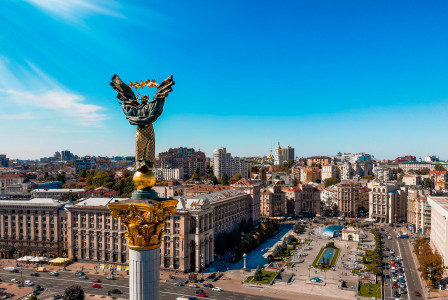
As European Tourism Day comes to its conclusion, one message resonates above all others: the future of tourism in Europe is not simply about recovery or growth—it is about redefining what it means to travel, to welcome, and to belong. Over the course of the event, speakers, city leaders, creators, and policymakers collectively painted a picture of a tourism landscape in transformation, where storytelling, identity, resilience, and responsibility form the new foundations of Europe’s appeal.
At the same time, Ukraine’s voice brought a powerful reminder of tourism’s deeper social role. Even in the context of war and destruction, tourism remains a vessel for memory, dignity, and community strength—a means of preserving identity while preparing for future renewal.
Together, these perspectives illuminate how tourism is evolving into something more meaningful and multidimensional. They highlight a shift toward purpose-driven travel—one that prioritises connection, values local stories, and acknowledges tourism’s role in strengthening resilience across regions. They also underscore the shared responsibility of destinations, institutions, and travellers in shaping a future where tourism supports both people and place.
European Commission
Topics
Albania
Armenia
Austria
Belgium
Bosnia and Herzegovina
Bulgaria
Croatia
Cyprus
Czechia
Denmark
Estonia
EU-27
Finland
France
Georgia
Germany
Greece
Hungary
Iceland
Ireland
Italy
Kosovo
Latvia
Liechtenstein
Lithuania
Luxembourg
Malta
Moldova
Montenegro
Netherlands
North Macedonia
Norway
Poland
Portugal
Romania
Serbia
Slovakia
Slovenia
Spain
Sweden
Switzerland
Türkiye
Ukraine
Other
Academic / Research and VET Institutions
Business Support Organisation
Company with 250 or more employees
Cluster Organisations
Consumer Organisations
Cultural and Heritage Organisations
Destination Management & Marketing Organisations
EU Institutions
Financial Institutions and Investors
Industry Associations and Chambers of Commerce
International Organisations
Local Authorities
Media / Journalist Organisations
National authorities
Networks and Federations / Confederations
NGOs / Non-profits
Notified Bodies
Regional Authorities
SMEs (a company with less than 250 employees)
Social Economy Entity
Trade Unions
Other
-
Specific types of tourism
-
-
Adventure tourism
-
Coastal, maritime and inland water tourism
-
Cultural tourism
-
Ecotourism
-
Education tourism
-
Festival tourism
-
Gastronomy tourism
-
Health and medical tourism
-
MICE tourism
-
Mountain tourism
-
Religious tourism
-
Rural tourism
-
Sports tourism
-
Urban/city tourism
-
Wellness tourism
-
-
Transition Pathway Strategic Areas
-
-
Accessible tourism services
-
Best practices, peer learning and networking
-
Changes in tourism demand and opportunities
-
Circularity of tourism services
-
Coordinated information on travelling
-
Cross-border travelling
-
Digitalisation of tourism SMEs and destinations
-
Equal and fair tourism jobs
-
Funding and support measures
-
Governance of tourism destinations
-
Green Transition of Tourism Companies and SMEs
-
Improving formal education
-
Improving statistics and indicators
-
Innovative tourism services
-
Multimodal travelling
-
Online visibility of tourism offer
-
Pact for skills
-
Promoting PEF/OEF methods for tourism
-
R&I on climate-friendly tourism
-
R&I on digital tools for tourism
-
Short-term rentals
-
Skills needs for twin transition
-
Sustainable mobility
-
Tools for data on tourism
-
Tourism strategies
-
Training opportunities
-
Well-being of residents
-
-
Business activities
-
-
Activities of amusement parks and theme parks
-
Activities of associations and other organisations supporting tourism
-
Air passenger transport
-
Camping grounds, recreational vehicle parks and trailer parks
-
Events catering and other food services
-
Festivals, cultural and entertainment activities
-
Gardens and nature reserves activities
-
Holiday Housing / Apartments and other short stay accommodation
-
Hotel and similar accommodation
-
Mobile beverage services
-
Mobile food services
-
Museums
-
Operation of historical sites
-
Other
-
Other accommodation
-
Other amusement and recreation activities
-
Other food and beverage services
-
Other holiday reservation services
-
Other tourism transportation activities
-
Rail Passenger transport
-
Recreational and sport activities
-
Restaurants, cafes and bars (Food and Beverage serving activities)
-
Road passenger transport
-
Tour operator activities
-
Travel agency activities
-
Water (sea, coastal and inland) passenger transport
-
Share
Destination Europe: A Story-Driven, Experience-Led Future
“Destination Europe” is evolving from a collection of must‑see icons into a shared cultural project defined by stories, values, and deeply felt experiences. Speakers emphasised that Europe must move decisively beyond the familiar pattern of “ten places in nine days,” a model of travel that prizes speed over connection and consumption over meaning. The contemporary traveller seeks something more intimate—personal passions, authentic encounters, and the sense of belonging that comes from engaging with local people and their stories.
Storytelling has therefore become the core of Europe’s brand. From films and series that spark curiosity about hidden neighbourhoods or architectural styles, to creators and travellers who shape awareness through images and narratives, Europe increasingly reaches people through culture long before they book a trip. This cultural pull makes it all the more important that Europe defines what responsible travel means. Across discussions, responsible travel was not portrayed as a simple checklist of sustainable actions but as a holistic approach that aligns curiosity with care, discovery with preservation, and visitor enjoyment with local wellbeing.
Central to this reframing is the idea of rebalancing demand. Europe must guide interest across seasons, regions, and types of experiences, not by discouraging travel but through intelligent redirection—sharing alternatives, adjusting timing, and using technology to help visitors find places that match their interests without overwhelming local communities. The goal is not to attract more visitors at any cost, but to attract the right visitors: those who value the cultural richness, environmental sensitivity, and social context of the places they explore. This approach requires a shift from counting arrivals to understanding impact. Metrics such as relevance, resilience, environmental stewardship, and cultural vitality are becoming more important than raw numbers.
This new model cannot emerge in isolation. Europe’s destinations, stakeholders, and institutions must act together, strengthening pan‑European cooperation to ensure consistency in standards, data, sustainability practices, and brand positioning. The idea of “Destination Europe” works only when destinations recognise their interdependence—economically, culturally, and environmentally. It also requires policymakers to take tourism seriously: to treat it as a strategic sector supported by investment, policy frameworks, and coordinated actions that reflect its true contribution to Europe’s competitiveness and cohesion.
Ukraine: Tourism as Resilience, Memory, and Identity
Alongside Europe’s strategic repositioning, Ukraine presented a deeply moving account of tourism’s role amid ongoing hardship. Despite the immense challenges of war, domestic tourism in Ukraine has grown, with tax revenues rising significantly in 2025 compared with the previous year. This growth is not driven by international arrivals but by Ukrainians travelling within their own borders, seeking brief respite, psychological renewal, and a sense of continuity with their homeland.
Speakers described how memory tourism and resilience tourism have become emerging forms of engagement. Rather than erasing difficult histories, Ukrainians are finding ways to honour their heritage, acknowledge loss, and reinforce collective identity. Tourism serves as a means to bind communities together at a time when maintaining social cohesion is both vital and fragile. SMEs play a crucial role, as do tailored initiatives that support veterans and medical tourism services, which help rebuild lives and create economic stability.
Yet the scale of destruction is severe: roughly 20 percent of Ukraine’s tourism sites have been damaged or destroyed, a loss that affects cultural heritage, identity, and livelihoods. The need for recovery support is acute, making coordinated international action indispensable. The Tourism Alliance, now joined by nine partner countries, stands as a beacon of collaboration, signalling Europe’s willingness to help restore Ukraine’s tourism assets and prepare for the moment when the country can safely welcome visitors from beyond its borders once again.
In this context, tourism becomes far more than an industry. It becomes a guardian of local identity, a way to sustain culture under pressure, and a promise of future renewal. It gives communities a reason to continue investing emotionally and economically in their places, even when uncertainty is high.
A Shared Path Forward
Bringing these narratives together, the closing message of European Tourism Day is clear: travel in Europe—and its neighbouring regions—must be built on purpose, resilience, and shared responsibility. Europe’s future depends on designing a tourism model that values stories over checklists, relationships over transactions, and long-term vitality over short-term volume. Ukraine’s story, meanwhile, illustrates how tourism can endure even in crisis, preserving identity and providing a foundation to rebuild.
Both perspectives call for cooperation, innovation, and a renewed understanding of what tourism represents. Europe and Ukraine together highlight that tourism is not simply a movement of people; it is a movement of meaning. The invitation now is to continue shaping that meaning collectively—ensuring that “Destination Europe” remains not only a place to visit, but a place to care for, invest in, and believe in, and ensuring that tourism strengthens resilience, honours local identity, and supports communities across Europe and beyond.
Comments (0)
Related content
Connected Partnership Opportunities
See also
A Year of Transformation: Key Insights from the EU Tourism Transition Pathway in 2025
- Categories
- Coastal, maritime and inland water tourism Cultural tourism Ecotourism +64 more

Green Transition: the Economic Strategy for Tourism
- Categories
- Coastal, maritime and inland water tourism Cultural tourism Ecotourism +64 more

Getting Started: Exploring the EU Tourism Platform's Home Page and Navigation
- Categories
- Coastal, maritime and inland water tourism Cultural tourism Ecotourism +64 more