

Articles
17 February 2026
Balance, Access & Investment: The Path to a Regenerative Shift
Articles
17 February 2026
Login / create an account to be able to react
-
499
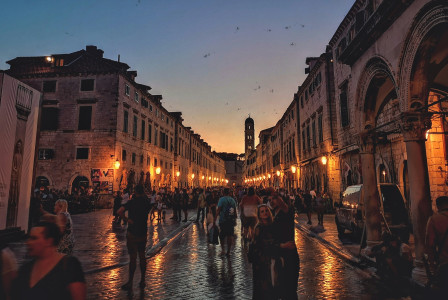
European Tourism Day revealed a clear message: the future of European travel depends on our ability to connect accessibility, investment, and regenerative thinking into one coherent approach. Tourism is not simply about managing visitor numbers; it is about shaping systems in which residents, ecosystems, and businesses all thrive. Achieving this means rebalancing flows, evolving financing models, and embedding the well‑being of communities and nature into every decision.
European Commission
Topics
Albania
Armenia
Austria
Belgium
Bosnia and Herzegovina
Bulgaria
Croatia
Cyprus
Czechia
Denmark
Estonia
EU-27
Finland
France
Georgia
Germany
Greece
Hungary
Iceland
Ireland
Italy
Kosovo
Latvia
Liechtenstein
Lithuania
Luxembourg
Malta
Moldova
Montenegro
Netherlands
North Macedonia
Norway
Poland
Portugal
Romania
Serbia
Slovakia
Slovenia
Spain
Sweden
Switzerland
Türkiye
Ukraine
Other
Academic / Research and VET Institutions
Business Support Organisation
Company with 250 or more employees
Cluster Organisations
Consumer Organisations
Cultural and Heritage Organisations
Destination Management & Marketing Organisations
EU Institutions
Financial Institutions and Investors
Industry Associations and Chambers of Commerce
International Organisations
Local Authorities
Media / Journalist Organisations
National authorities
Networks and Federations / Confederations
NGOs / Non-profits
Notified Bodies
Regional Authorities
SMEs (a company with less than 250 employees)
Social Economy Entity
Trade Unions
Other
-
Specific types of tourism
-
-
Adventure tourism
-
Coastal, maritime and inland water tourism
-
Cultural tourism
-
Ecotourism
-
Education tourism
-
Festival tourism
-
Gastronomy tourism
-
Health and medical tourism
-
MICE tourism
-
Mountain tourism
-
Religious tourism
-
Rural tourism
-
Sports tourism
-
Urban/city tourism
-
Wellness tourism
-
-
Transition Pathway Strategic Areas
-
-
Accessible tourism services
-
Best practices, peer learning and networking
-
Changes in tourism demand and opportunities
-
Coordinated information on travelling
-
Digitalisation of tourism SMEs and destinations
-
Equal and fair tourism jobs
-
Funding and support measures
-
Governance of tourism destinations
-
Green Transition of Tourism Companies and SMEs
-
Improving formal education
-
Improving statistics and indicators
-
Innovative tourism services
-
Multimodal travelling
-
R&I on climate-friendly tourism
-
R&I on digital tools for tourism
-
Short-term rentals
-
Skills needs for twin transition
-
Sustainable mobility
-
Tools for data on tourism
-
Tourism strategies
-
Training opportunities
-
Well-being of residents
-
-
Business activities
-
-
Activities of amusement parks and theme parks
-
Activities of associations and other organisations supporting tourism
-
Air passenger transport
-
Camping grounds, recreational vehicle parks and trailer parks
-
Events catering and other food services
-
Festivals, cultural and entertainment activities
-
Gardens and nature reserves activities
-
Holiday Housing / Apartments and other short stay accommodation
-
Hotel and similar accommodation
-
Mobile beverage services
-
Mobile food services
-
Museums
-
Operation of historical sites
-
Other
-
Other accommodation
-
Other amusement and recreation activities
-
Other food and beverage services
-
Other holiday reservation services
-
Other tourism transportation activities
-
Rail Passenger transport
-
Recreational and sport activities
-
Restaurants, cafes and bars (Food and Beverage serving activities)
-
Road passenger transport
-
Tour operator activities
-
Travel agency activities
-
Water (sea, coastal and inland) passenger transport
-
Share
A major reference point during European Tourism Day was the newly published T4T Horizontal Task‑Force report on “Unbalanced Tourism”, a comprehensive EU‑level study examining why tourism pressures accumulate in certain places and seasons while others remain under‑visited. The Task‑Force brings together experts, cities and national authorities to analyse how Europe’s visitor flows have changed and to propose practical tools for better balance. According to the report, the public debate often focuses on overtourism—the visible overcrowding of iconic sites—but this is only the surface. The deeper issue is what the report defines as “unbalanced tourism”: a structural pattern in which tourism demand becomes concentrated in specific geographies or time periods, creating both overload in some destinations and missed opportunities in others. This distinction matters, because while overtourism is a symptom that appears once pressure is already high, unbalanced tourism is the underlying condition that policymaking can address proactively through better data, planning, and capacity‑aware governance.
Balanced & accessible tourism
Creating a more balanced and accessible tourism landscape begins with understanding just how uneven Europe’s visitor flows have become. The T4T report shows that in 2024, 48% of all international arrivals to the EU were concentrated in the summer months, while the top ten global destinations absorbed 40% of the world’s 1.5 billion arrivals—patterns that intensify pressure in iconic hotspots and leave many regions overlooked.
Sector examples from European Tourism Day reveal how destinations are responding.
Cruise operators highlighted that Europe’s newest fleets are cleaner and more efficient, but that meaningful progress relies on coordinating ship arrivals to respect local limits—reducing pressure while creating more predictable value for local businesses.
Amsterdam’s long-term approach shows how cities can recalibrate without resorting to blunt controls. By using targeted tools—tourist taxes, hotel caps, and refined accommodation rules—the city is gradually reshaping visitor behaviour while protecting liveability for residents.
Inclusion also forms a core part of accessibility. Intrepid Travel shared that women make 80% of travel decisions and represent 64% of global travellers, meaning that directing value toward women‑led suppliers and expanding women‑only experiences is both socially impactful and commercially strategic. Europe’s reputation as the safest continent for women further accelerates this shift.
Meanwhile, Vilnius demonstrated how strengthening the urban fabric can attract visitors more evenly. With 60% greenery, a clean “swimmable city” river system, and strong community engagement, Vilnius offers what travellers increasingly seek: authentic, green, and citizen‑driven experiences that distribute demand beyond the usual hotspots.
Balanced and accessible tourism, therefore, is less about limiting movement and more about building environments—social, ecological, and regulatory—that naturally broaden where visitors go and how local communities benefit.
Unlocking private investment
Driving this transition toward balance requires unlocking a more dynamic, resilient investment ecosystem. Industry leaders emphasised that Europe’s tourism sector faces persistent structural barriers: high costs, high risk, fragmented markets, investor conservatism, and a financing landscape dominated by traditional banks. These factors make it difficult for travel‑tech innovators and SMEs to scale.
Speakers called for Europe to treat tourism as a strategic industry—worthy of the same investment ambition as energy, transport, or digital innovation. That means attracting global capital, expanding public‑private partnerships, and investing in the core infrastructure that enables balanced tourism: rail networks, multimodal mobility, and integrated digital transport systems. These upgrades broaden access to under‑visited regions and make more sustainable travel patterns both practical and attractive.
The T4T report reinforces this direction, stressing that investment must be informed by high‑quality, interoperable data. When destinations combine official statistics with telecom mobility insights and social media signals, they can anticipate peaks early and steer demand through incentives, communications, and mobility design.
Investment must also reach communities themselves. Empowering local entrepreneurs, artisans, cultural leaders, and women‑led businesses ensures that value stays in the destination and that tourism strengthens—not dilutes—local identity.
In short, unlocking the next era of tourism investment means backing the infrastructure, technology, and local talent that make Europe’s tourism system more distributed, more resilient, and more future‑ready.
Regenerative priorities
Building a regenerative tourism model means going beyond sustainability to actively restore ecosystems, strengthen cultural resilience, and support long‑term well‑being for residents. Regeneration calls for a shift in mindset—from managing impacts to designing systems that produce positive outcomes.
Speakers at European Tourism Day emphasised a staged regenerative journey, moving step by step from sustainable to restorative and finally regenerative practices. This involves adopting an eco‑centric systems lens, recognising that tourism intersects with ecology, culture, mobility, energy, food systems, and civic life.
Tampere offered a compelling illustration. Rooted in Finland’s “happiness model,” the city integrates accessibility, creativity, digitalisation, and barrier‑free nature into its planning. With 80% of residents satisfied with tourism growth, Tampere demonstrates that when local well‑being is prioritised, tourism flourishes as a natural extension of a resilient community.
People and skills are equally central. SMEs need support to innovate, go green, digitise, and co‑create experiences that reflect local culture.
Dubrovnik’s community‑first strategy—protecting heritage, supporting women entrepreneurs, and elevating local storytelling—shows how even high‑pressure destinations can shift toward dignity‑based, culturally rooted tourism.
Finally, climate resilience underpins any regenerative future. Data from Copernicus Earth observation, when paired with tourism analytics, enables destinations to plan around risks such as heatwaves, erosion, biodiversity loss, and coastal vulnerability—ensuring safety, comfort, and ecological protection as climate pressures intensify.
Regenerative tourism is therefore not a distant ambition; it is a practical framework for aligning community, climate, and economic resilience—ensuring that Europe’s destinations remain vibrant places to live and meaningful places to visit.
As European Tourism Day made clear, the future of tourism in Europe will be defined not by how many visitors the continent can attract, but by how intelligently it can manage, distribute, and enrich those flows. When accessibility, investment, and regeneration are treated as a single, interconnected agenda, tourism becomes more than an economic engine—it becomes a force for community well‑being, environmental renewal, and long‑term resilience. Europe now has the frameworks, data, and collaborative momentum to lead this shift; the task ahead is to turn these insights into action that keeps destinations vibrant, livable, and meaningful for generations to come.
Comments (0)
Related content
Connected Partnership Opportunities
See also
People of the Platform: putting skills, resilience and inclusion at the heart of tourism’s next chapter
- Categories
- Coastal, maritime and inland water tourism Cultural tourism Ecotourism +64 more
Tourism Reimagined: AI, VR and Neurotourism for a Resilient Future
- Categories
- Coastal, maritime and inland water tourism Cultural tourism Ecotourism +64 more
Destination Europe & Ukraine: Closing Messages
- Categories
- Coastal, maritime and inland water tourism Cultural tourism Ecotourism +64 more