

Articles
03 February 2026
More Than Start-ups: Why Travel Tech Became Strategic for European Tourism
Articles
03 February 2026
Login / create an account to be able to react
-
551
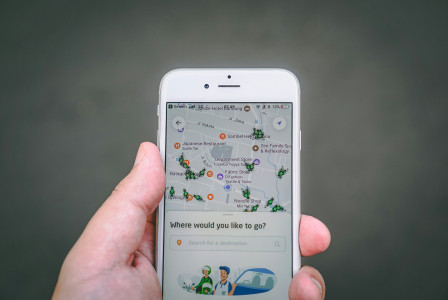
Travel technology has slipped from the margins of tourism to its core. Over two decades, European companies have built platforms that created new markets, empowered consumers and allowed tourism businesses of all sizes to operate across borders. Their success rests not only on entrepreneurial flair, but on a wider ecosystem of investors, incubators and public programmes, reinforced by EU rules designed to promote trust and fairness in digital markets. As artificial intelligence redraws competitive lines, Europe’s ability to sustain a genuinely integrated Single Market may matter as much as its capacity to innovate.
Topics
Albania
Armenia
Austria
Belgium
Bosnia and Herzegovina
Bulgaria
Croatia
Cyprus
Czechia
Denmark
Estonia
EU-27
Finland
France
Georgia
Germany
Greece
Hungary
Iceland
Ireland
Italy
Kosovo
Latvia
Liechtenstein
Lithuania
Luxembourg
Malta
Moldova
Montenegro
Netherlands
North Macedonia
Norway
Poland
Portugal
Romania
Serbia
Slovakia
Slovenia
Spain
Sweden
Switzerland
Türkiye
Ukraine
Other
Academic / Research and VET Institutions
Business Support Organisation
Company with 250 or more employees
Cluster Organisations
Consumer Organisations
Cultural and Heritage Organisations
Destination Management & Marketing Organisations
EU Institutions
Financial Institutions and Investors
Industry Associations and Chambers of Commerce
International Organisations
Local Authorities
Media / Journalist Organisations
National authorities
Networks and Federations / Confederations
NGOs / Non-profits
Notified Bodies
Regional Authorities
SMEs (a company with less than 250 employees)
Social Economy Entity
Trade Unions
Other
-
Specific types of tourism
-
-
Adventure tourism
-
Coastal, maritime and inland water tourism
-
Cultural tourism
-
Ecotourism
-
Education tourism
-
Festival tourism
-
Gastronomy tourism
-
Health and medical tourism
-
MICE tourism
-
Mountain tourism
-
Religious tourism
-
Rural tourism
-
Sports tourism
-
Urban/city tourism
-
Wellness tourism
-
-
Transition Pathway Strategic Areas
-
-
Digitalisation of tourism SMEs and destinations
-
Innovative tourism services
-
R&I on digital tools for tourism
-
Tools for data on tourism
-
Tourism strategies
-
-
Business activities
-
-
Activities of amusement parks and theme parks
-
Activities of associations and other organisations supporting tourism
-
Air passenger transport
-
Camping grounds, recreational vehicle parks and trailer parks
-
Events catering and other food services
-
Festivals, cultural and entertainment activities
-
Gardens and nature reserves activities
-
Holiday Housing / Apartments and other short stay accommodation
-
Hotel and similar accommodation
-
Mobile beverage services
-
Mobile food services
-
Museums
-
Operation of historical sites
-
Other
-
Other accommodation
-
Other amusement and recreation activities
-
Other food and beverage services
-
Other holiday reservation services
-
Other tourism transportation activities
-
Rail Passenger transport
-
Recreational and sport activities
-
Restaurants, cafes and bars (Food and Beverage serving activities)
-
Road passenger transport
-
Tour operator activities
-
Travel agency activities
-
Water (sea, coastal and inland) passenger transport
-
Share
How travel tech became tourism’s backbone
Europe’s tourism sector still sells the same things - beds, seats and experiences - but it increasingly sells them through a different machine. In the early 2000s, the internet reinvented the old world: websites replaced brochures; email replaced phone calls. Over time, those tools turned into market-makers: platforms that match supply and demand at scale, standardise information, and, crucially, shape what travellers see first.
What changed was not just where people book, but what booking now does. Platforms compress search costs, intensify price comparison and funnel demand towards suppliers that can play by digital rules: instant confirmation, transparent conditions, reviews, cancellation logic. For consumers, this has meant more choice and visibility. For small tourism firms - from guesthouse owners to activity providers - it has opened routes to international demand that once required wholesalers, brochures and relationships.
That is where Europe’s travel tech champions fit in: not as ornaments, but as connectors between fragmented supply and increasingly mobile demand. GetYourGuide, founded in 2009, built a marketplace for tours and activities that helped turn “things to do” into a globally tradable category.
BlaBlaCar made spare car seats a form of intercity capacity, a distinctly European answer to the continent’s patchwork transport map. And Omio built its proposition around a stubborn European reality - multimodal travel across borders is possible, but rarely simple - by aggregating transport options into one decision interface.
All of this amounts to the same conclusion: technology did not merely digitise tourism. It rearranged its plumbing - how visibility is earned, how trust is formed, and how demand is distributed. And once a sector’s plumbing changes, the sector itself tends to follow.
Success was systemic, not accidental
Europe’s travel tech champions do not emerge in isolation. They grow within an unusually dense ecosystem - one in which private capital, public support and sector-specific expertise interact frequently enough to reduce risk without smothering initiative. That ecosystem took shape over time, but it continues to function - and to matter - today.
Venture capital plays a growing role as digital tourism scales. According to Invest Europe, venture capital investment in Europe more than doubled between 2015 and 2022, reflecting a broader expansion of risk finance for technology-driven services, including mobility, platforms and consumer-facing digital applications closely linked to tourism. While travel tech remains a small slice of the overall market, its funding conditions increasingly mirror those of the wider European tech sector.
Capital alone, however, rarely suffices. Incubators and accelerators continue to lower entry barriers, particularly in a sector as fragmented as tourism. Across the EU, start-up support structures - often backed by national innovation agencies or EU-level initiatives such as Startup Europe - focus less on picking winners than on compressing learning curves, helping young firms navigate regulation, funding and cross-border scaling. A similar ecosystem logic underpins initiatives such as TURISTEC, the first international cluster dedicated to technologies applied to tourism, which brings together technology providers with SMEs, hotels and other tourism actors to support digital uptake across the sector.
Public programmes complement this private momentum by targeting a structural weakness of the tourism sector: its dominance by small firms with limited capacity to invest in technology. EU-level instruments such as Digital Innovation Hubs and the COSME programme further support tourism SMEs by providing targeted assistance and direct funding for digital uptake. Unlike finance or telecoms, tourism innovation depends heavily on matchmaking - between start-ups, incumbents and destinations - rather than on scale alone. A prominent example is France Tourisme Tech, which connects start-ups with established tourism players, investors and local authorities. Its logic is deliberately modest: de-risk early adoption of digital solutions while allowing market demand, not public authorities, to determine what scales. This is reflected in ongoing work on ecosystem-based support for tourism start-ups. In December 2025, the OECD hosted a webinar on the role of incubators and accelerators in supporting travel and tourism start-ups, highlighting how targeted support can help young firms overcome barriers such as fragmented markets, access to finance and skills gaps. The exercise underlined that, even as travel tech matures, sector-specific ecosystem support remains an active policy concern.
The result is a form of cumulative advantage. No single programme creates Europe’s travel tech champions, and no individual firm defines the ecosystem. What matters is density: enough capital, support structures and institutional continuity to allow experimentation, failure and scaling to coexist.
Regulation as scaffolding, not shackles
In digital tourism, trust matters more than speed. Transactions depend on data, platforms and payments, often across borders and between unfamiliar actors. Consumer protection, transparency and predictable rules are therefore not obstacles to growth; they are its foundations.
This logic underpins the EU’s approach to digital regulation. Over the past decade, the Union has built a comprehensive framework aimed at fostering trust and fairness among technology players, while preserving scope for innovation. Measures such as the Digital Services Act and Digital Markets Act address platform responsibilities and competition; the AI Act sets guardrails for the use of artificial intelligence; while the Platform-to-Business Regulation, Data Act and Data Governance Act seek to improve transparency, data access and fair commercial relations. Together, they shape the conditions under which digital tourism markets operate.
For tourism, the challenge has rarely been the existence of rules. It has been their uneven application. Fragmentation - differences in interpretation, enforcement and administrative practice across Member States - continues to raise costs for firms seeking to scale across borders, particularly smaller digital players.
For the European Commission, this leaves a familiar task. Europe’s regulatory model has strengthened trust in digital markets. Turning that framework into a genuinely integrated Single Market remains the hardest and most consequential constraint to remove.
Artificial intelligence changes the tempo — and the stakes
Artificial intelligence promises to accelerate everything in travel tech, but not without raising new strategic questions. What took platforms a decade to optimise - pricing, search and customer interaction - AI is now compressing into years, sometimes months.
AI is already being put to work in tourism-related services. Across the industry, tools powered by artificial intelligence are used for personalised recommendations, efficient customer service via chatbots and itinerary optimisation, reflecting broader digital adoption trends that the EU highlights as part of innovation in the tourism ecosystem. An illustrative example comes from Croatia, where the hospitality platform Turneo has developed Neo, an AI agent trained on thousands of real guest conversations and designed to integrate directly with hotel booking, restaurant, spa and experience systems. The solution shows how AI is beginning to take over functions traditionally performed by concierges or call centres, reflecting guests’ rising expectations for fast, accurate and personalised assistance.
For the travel tech sector, the result is a double-edged impetus. AI can spur productivity gains and richer customer experiences, but it also raises the bar for firms that must integrate these technologies responsibly within a regulatory framework that is still being phased in.
From platforms to places: technology reaches destinations
Travel technology is no longer confined to selling trips; it increasingly shapes the places travellers visit. What began as a commercial tool is becoming part of how destinations manage growth, pressure and public acceptance of tourism. Across Europe, digital tools are being used to monitor visitor flows, support capacity planning and inform local decision-making.
EU-supported initiatives illustrate how digital tools are being applied at destination level. For example, the Smart Tourism Destinations project helps cities develop data-driven approaches to destination management. Participating cities, including Krakow, have focused on improving digital access to tourism services while using data to better align visitor activity with local infrastructure and residents’ needs. The emphasis is less on attracting ever more visitors than on managing tourism more intelligently.
At policy level, this is reinforced by the Common European Tourism Data Space. Through the DEPLOYTOUR project, co-funded under the EU Digital Europe Programme, the EU is deploying a trusted data space to support the competitiveness, sustainability and resilience of the tourism sector, benefiting both destinations and tourism businesses.
When engineers meet hoteliers
Innovation thrives where cultures collide - or fails where they do not. Few sectors illustrate this better than tourism, where digital engineers and hospitality professionals often approach the same problem from different worlds.
Technology firms entering tourism tend to prioritise speed, scale and product design. Musement, founded in Italy as a tech-driven platform to digitalise access to tours, museums and cultural attractions, exemplifies this approach. By standardising inventory and distribution in a highly fragmented segment, it helped turn local experiences into a scalable, cross-border product - before being acquired by a larger travel group.
The opposite trajectory is equally instructive. Established tourism players increasingly invest in technology to regain control over distribution and customer relationships. Accor, one of Europe’s largest hotel groups, has over recent years built up digital booking platforms, loyalty ecosystems and data capabilities to reduce reliance on intermediaries. Its strategy reflects a broader shift among incumbents: competing with platforms now requires thinking like one.
Europe offers both success stories and tension points. Technology firms can underestimate regulatory complexity, seasonality and local sensitivities; tourism actors may struggle with the pace and abstraction of digital development. These mismatches explain why not every innovation travels smoothly across destinations or markets. The pattern, however, is consistent. The most resilient players - whether born in tech or tourism - are those that learn to speak both languages. In Europe’s travel tech ecosystem, cultural translation has become as important as code.
Europe’s familiar dilemma
Europe’s experience with travel technology reflects a familiar pattern. Innovation has flourished, and digital platforms have become essential infrastructure for a sector as complex and cross-border as tourism. What has emerged is not a lack of ideas, but a landscape shaped by multiple markets, rules and practices.
As artificial intelligence accelerates change, the costs of fragmentation become more visible. Data, scale and interoperability matter more than before, particularly in platform-driven industries. In this context, Europe’s long-term advantage may depend less on generating new technologies than on ensuring that existing ones can operate seamlessly across borders.
The question, then, is not whether Europe can innovate, but how effectively it can align markets, policies and practices to support the next phase of travel tech development.
Comments (0)
Related content


Connected Partnership Opportunities
See also

People of the Platform: putting skills, resilience and inclusion at the heart of tourism’s next chapter
- Categories
- Coastal, maritime and inland water tourism Cultural tourism Ecotourism +64 more
Destination Europe & Ukraine: Closing Messages
- Categories
- Coastal, maritime and inland water tourism Cultural tourism Ecotourism +64 more
European Tourism Day—shaping the tourism of tomorrow
- Categories
- Coastal, maritime and inland water tourism Cultural tourism Ecotourism +64 more