

Best practices
26 October 2026
Nature Park Our - Using Interregional Cooperation to Turn Environmental Protection into Sustainable Dark-Sky Tourism
Best practices
26 October 2026
Login / create an account to be able to react
-
2
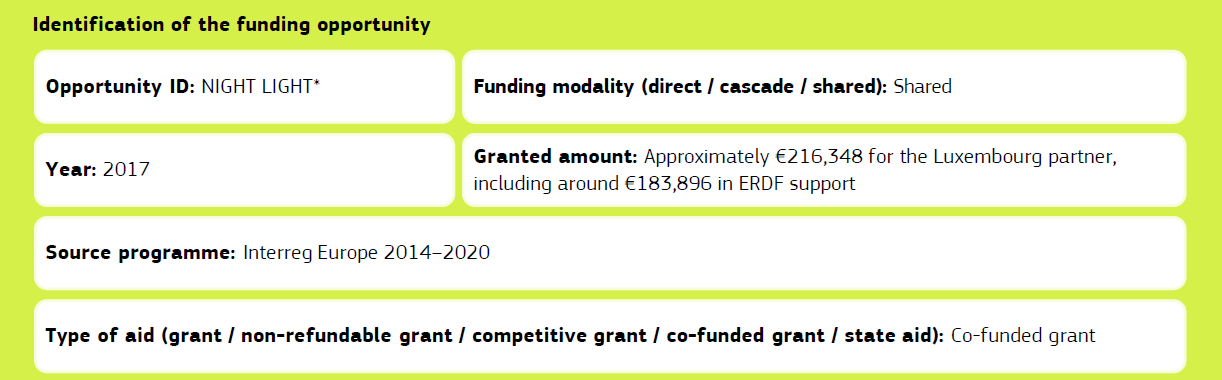
*Improving regional policies to reduce light pollution and protect and valorise dark night skies
Editorial team
Topics
Albania
Armenia
Austria
Belgium
Bosnia and Herzegovina
Bulgaria
Croatia
Cyprus
Czechia
Denmark
Estonia
EU-27
Finland
France
Georgia
Germany
Greece
Hungary
Iceland
Ireland
Italy
Kosovo
Latvia
Liechtenstein
Lithuania
Luxembourg
Malta
Moldova
Montenegro
Netherlands
North Macedonia
Norway
Poland
Portugal
Romania
Serbia
Slovakia
Slovenia
Spain
Sweden
Switzerland
Türkiye
Ukraine
Other
Academic / Research and VET Institutions
Business Support Organisation
Company with 250 or more employees
Cluster Organisations
Consumer Organisations
Cultural and Heritage Organisations
Destination Management & Marketing Organisations
EU Institutions
Financial Institutions and Investors
Industry Associations and Chambers of Commerce
International Organisations
Local Authorities
Media / Journalist Organisations
National authorities
Networks and Federations / Confederations
NGOs / Non-profits
Notified Bodies
Regional Authorities
SMEs (a company with less than 250 employees)
Social Economy Entity
Trade Unions
Other
-
Specific types of tourism
-
-
Adventure tourism
-
Coastal, maritime and inland water tourism
-
Cultural tourism
-
Ecotourism
-
Education tourism
-
Festival tourism
-
Gastronomy tourism
-
Health and medical tourism
-
MICE tourism
-
Mountain tourism
-
Religious tourism
-
Rural tourism
-
Sports tourism
-
Urban/city tourism
-
Wellness tourism
-
-
Transition Pathway Strategic Areas
-
-
Accessible tourism services
-
Best practices, peer learning and networking
-
Changes in tourism demand and opportunities
-
Circularity of tourism services
-
Coordinated information on travelling
-
Cross-border travelling
-
Digitalisation of tourism SMEs and destinations
-
Equal and fair tourism jobs
-
Funding and support measures
-
Governance of tourism destinations
-
Green Transition of Tourism Companies and SMEs
-
Improving formal education
-
Improving statistics and indicators
-
Innovative tourism services
-
Multimodal travelling
-
Online visibility of tourism offer
-
Pact for skills
-
Promoting PEF/OEF methods for tourism
-
R&I on climate-friendly tourism
-
R&I on digital tools for tourism
-
Short-term rentals
-
Skills needs for twin transition
-
Sustainable mobility
-
Tools for data on tourism
-
Tourism strategies
-
Training opportunities
-
Well-being of residents
-
-
Business activities
-
-
Activities of amusement parks and theme parks
-
Activities of associations and other organisations supporting tourism
-
Air passenger transport
-
Camping grounds, recreational vehicle parks and trailer parks
-
Events catering and other food services
-
Festivals, cultural and entertainment activities
-
Gardens and nature reserves activities
-
Holiday Housing / Apartments and other short stay accommodation
-
Hotel and similar accommodation
-
Mobile beverage services
-
Mobile food services
-
Museums
-
Operation of historical sites
-
Other
-
Other accommodation
-
Other amusement and recreation activities
-
Other food and beverage services
-
Other holiday reservation services
-
Other tourism transportation activities
-
Rail Passenger transport
-
Recreational and sport activities
-
Restaurants, cafes and bars (Food and Beverage serving activities)
-
Road passenger transport
-
Tour operator activities
-
Travel agency activities
-
Water (sea, coastal and inland) passenger transport
-
Share
Scope of the programme
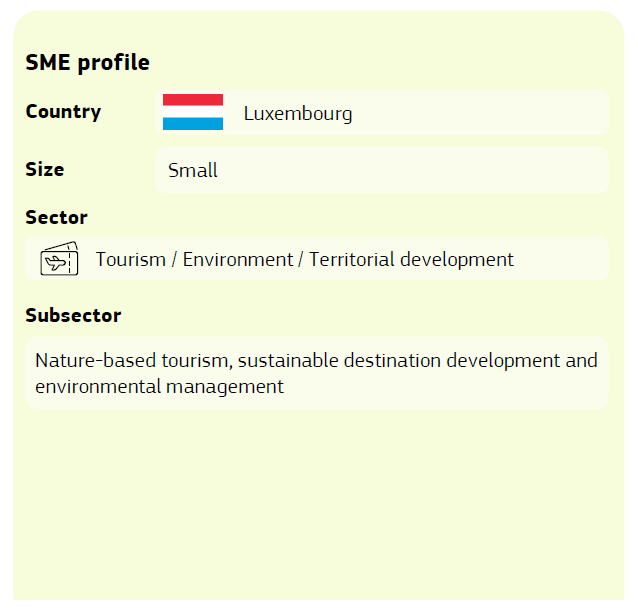
• Countries impacted: Luxembourg, the Netherlands, Hungary, Spain, Denmark, Slovenia and Italy
• Thematic axis: Reduction of light pollution, protection of dark night skies, biodiversity preservation and sustainable tourism development linked to dark-sky areas
• Funding programme lineage (EU, national, regional): EU
Description of the project
• Project objective(s): The project aimed to improve regional policies to reduce light pollution, protect dark night skies and use these protected natural assets to support more sustainable territorial development. For Nature Park Our, the objective was to reduce light emissions in municipalities, strengthen environmental protection in vulnerable rural and protected areas, and support the development of sustainable dark-sky tourism initiatives.
• Duration: 2017–2021
• Main activities:
- Participation in interregional learning and policy exchange on light-pollution management
- Mobilisation of regional and local stakeholders around dark-sky protection
- Identification and transfer of good practices from other European regions
- Preparation of a regional action plan to reduce light emissions in municipalities
- Awareness-raising and policy work linking environmental protection with sustainable tourism opportunities
• Outputs:
- A regional action plan on light-pollution reduction
- Stronger integration of light-pollution considerations into local and national policy frameworks
- Increased awareness of dark skies as both an environmental and tourism asset
- Improved basis for sustainable dark-sky tourism development in the region
Type of application
• Single applicant: No
• Consortium members: Province of Fryslân (Lead Partner), Hajdú-Bihar County Government, Avila County Council, Nature Park Our, Samsø Energy Academy, Business Support Centre Kranj, Basilicata Region, Matera-Basilicata 2019 Foundation, and Island Government of La Palma
• Subcontractor: No
Success Factors
• Access to information: A strong enabling factor was access to reliable programme information and support structures that helped identify relevant opportunities and understand how the project idea could fit Interreg priorities.
• Effective partnership building: One of the main success factors was the quality of the consortium. The project relied on a partnership made up of committed and experienced public actors from different European regions, which created trust, continuity and a strong basis for cooperation.
• Previous experience with funding: Prior experience with programmes such as LEADER and previous Interreg initiatives helped the organisation understand funding logic, cooperation requirements and the type of work expected in European projects.
• Strategic fit with call priorities: The project responded to a real territorial need: reducing light pollution in a protected rural area while exploring sustainable ways of valorising dark skies. This gave the proposal a clear policy rationale and a strong fit with environmental and sustainable development priorities.
Barriers & Challenges
• Administrative burden: Administrative and financial reporting requirements were one of the main challenges, particularly in relation to controls, documentation, staff-cost reporting and programme-specific procedures.
• Time & resource constraints: As a small organisation with limited internal administrative capacity, managing a European cooperation project required a significant effort and placed pressure on available human resources.
• Partnership & consortium risks: Building and managing a strong partnership is essential but also challenging. The success of this type of project depends heavily on the reliability, continuity and commitment of the partners involved.
• Complexity of the call: Interreg-type projects can be highly complex for organisations that do not work with these procedures on a regular basis, especially when it comes to proposal preparation, financial planning and implementation requirements.
Lessons learned
• Reliable partnerships are critical to success: A strong consortium based on trust, continuity and real commitment is one of the most important conditions for a successful European project.
• European cooperation projects generate value beyond funding: Their impact lies not only in the financial support received, but also in the exchange of knowledge, policy learning, capacity-building and long-term relationships that they create.
• Small organisations need support structures to access complex funding schemes: Access to programme guidance, contact points and practical support can make a decisive difference in enabling smaller territorial actors to participate successfully in European funding.
This best practice illustrates how a small public tourism-and-environment stakeholder can use European interregional cooperation to transform a local environmental challenge into a broader policy and tourism opportunity. Nature Park Our’s experience shows that successful access to European funding depends not only on financial resources, but also on strong partnerships, good programme intelligence and a project idea clearly rooted in territorial needs. It represents a valuable example of how sustainable tourism can emerge from environmental protection, policy learning and long-term regional cooperation.
Comments (0)
Connected Partnership Opportunities
See also
ENNOV Solutions - Building a Competitive EU Funding Proposal as a Solo Founder
- Categories
- Coastal, maritime and inland water tourism Cultural tourism Ecotourism +64 more
B&B Alta Murgia - Aligning the company's purpose with European opportunities
- Categories
- Coastal, maritime and inland water tourism Cultural tourism Ecotourism +64 more
Merill Rural Network - Using EU-Funded Digital Innovation to Strengthen Rural Tourism in Malta
- Categories
- Coastal, maritime and inland water tourism Cultural tourism Ecotourism +64 more