

Knowledge documents
08 July 2026
“Collaborative governance of tourism destinations” Summary
Knowledge documents
08 July 2026
Login / create an account to be able to react
-
106

At a glance
Resilience, Skills and Inclusion
The topic focused on how collaborative governance models can improve the way tourism destinations are managed, moving beyond promotion focused approaches towards integrated destination management. It highlighted the importance of shared decision making, clear governance structures, and active involvement of public authorities, the private sector, and local communities to address complex challenges such as overtourism, sustainability, and destination resilience.
Why it matters?
Tourism destinations operate within complex systems where decisions on tourism interact with housing, mobility, culture, environment, and quality of life. Fragmented governance and limited coordination can undermine long term sustainability. Collaborative governance enables destinations to align policies, build consensus among stakeholders, and implement balanced strategies that maximise tourism benefits while minimising negative impacts on communities and local environments.
Editorial team
Topics
Albania
Armenia
Austria
Belgium
Bosnia and Herzegovina
Bulgaria
Croatia
Cyprus
Czechia
Denmark
Estonia
EU-27
Finland
France
Georgia
Germany
Greece
Hungary
Iceland
Ireland
Italy
Kosovo
Latvia
Liechtenstein
Lithuania
Luxembourg
Malta
Moldova
Montenegro
Netherlands
North Macedonia
Norway
Poland
Portugal
Romania
Serbia
Slovakia
Slovenia
Spain
Sweden
Switzerland
Türkiye
Ukraine
Other
Academic / Research and VET Institutions
Business Support Organisation
Company with 250 or more employees
Cluster Organisations
Consumer Organisations
Cultural and Heritage Organisations
Destination Management & Marketing Organisations
EU Institutions
Financial Institutions and Investors
Industry Associations and Chambers of Commerce
International Organisations
Local Authorities
Media / Journalist Organisations
National authorities
Networks and Federations / Confederations
NGOs / Non-profits
Notified Bodies
Regional Authorities
SMEs (a company with less than 250 employees)
Social Economy Entity
Trade Unions
Other
-
Specific types of tourism
-
-
Adventure tourism
-
Coastal, maritime and inland water tourism
-
Cultural tourism
-
Ecotourism
-
Education tourism
-
Festival tourism
-
Gastronomy tourism
-
Health and medical tourism
-
MICE tourism
-
Mountain tourism
-
Religious tourism
-
Rural tourism
-
Sports tourism
-
Urban/city tourism
-
Wellness tourism
-
-
Transition Pathway Strategic Areas
-
-
Governance of tourism destinations
-
-
Business activities
-
-
Activities of amusement parks and theme parks
-
Activities of associations and other organisations supporting tourism
-
Air passenger transport
-
Camping grounds, recreational vehicle parks and trailer parks
-
Events catering and other food services
-
Festivals, cultural and entertainment activities
-
Gardens and nature reserves activities
-
Holiday Housing / Apartments and other short stay accommodation
-
Hotel and similar accommodation
-
Mobile beverage services
-
Mobile food services
-
Museums
-
Operation of historical sites
-
Other
-
Other accommodation
-
Other amusement and recreation activities
-
Other food and beverage services
-
Other holiday reservation services
-
Other tourism transportation activities
-
Rail Passenger transport
-
Recreational and sport activities
-
Restaurants, cafes and bars (Food and Beverage serving activities)
-
Road passenger transport
-
Tour operator activities
-
Travel agency activities
-
Water (sea, coastal and inland) passenger transport
-
Share
What is this topic about?
The topic examined how destination governance can be strengthened through collaboration, shared competences, and inclusive decision‑making processes. Drawing on the monthly article “Change Drivers: Stakeholders, Competence, and Decision‑Making in Destination Governance”, the webinar “Better together: Improving tourism through a collaborative approach to effective governance”, and the online discussion “Collaborative governance of destinations” in April 2025, the focus was on identifying governance gaps, clarifying roles and responsibilities, and exploring practical approaches to cooperation across governance levels.
Key themes included:
- The shift from fragmented and sector‑specific governance towards integrated, destination‑wide governance models
- The roles, competences, and power dynamics of key stakeholders in destination decision‑making
- The importance of political leadership, stakeholder engagement, and community participation in shaping destination strategies
Stakeholder stories
The initiatives showcased illustrate how European destinations are applying collaborative governance approaches, including:
- Sustainable Tourism Observatory, Vienna Tourist Board: monitoring tourism impacts and resident sentiment through indicators and data analysis to support evidence‑based decision‑making and collaborative destination governance.
- Dublin City Digital Portal, Dublin City Council: providing a shared digital entry point to centralise information and support coordination among city authorities, destination managers, and tourism stakeholders.
- Resident Card Scheme, Gdańsk Tourism Organisation: connecting residents, businesses, and tourism benefits through a data‑enabled city card.
- Flourishing Flanders Strategy, Visit Flanders: embedding resident wellbeing at the heart of tourism policy by aligning governance, long‑term collaboration, and measurement frameworks with quality‑of‑life objectives.
- Regional Tourism Strategy, Attica Region: co‑creating a broader tourism portfolio through public consultation and cross‑sector cooperation.
- Sustainable Tourism Partnership, EU Urban Initiative: supporting cities in strengthening destination governance through political leadership and long‑term coordination.
- Capitals of Smart Tourism – Best Practices Compilations, European Commission: showcasing city‑level governance and community‑engagement practices in tourism.
- Tourism Governance Framework, OECD: providing guidance on clarifying roles and coordination among stakeholders in complex tourism systems.
Key conclusions and emerging trends
Stakeholder stories highlight a clear shift towards more collaborative and integrated governance models in tourism.
Key conclusions and emerging trends include:
- Fragmented decision‑making remains a core challenge, with unclear roles and overlapping competences limiting effective destination management in many destinations.
- Collaborative governance models are increasingly being adopted, bringing together public authorities, DMOs, businesses, and communities to better align tourism with housing, mobility, culture, and quality‑of‑life objectives.
- Community engagement is becoming central to destination governance, with destinations placing greater emphasis on resident participation, transparency, and social acceptance of tourism policies.
- Political leadership and long‑term commitment are critical enablers, ensuring that governance reforms and shared visions are sustained beyond electoral cycles and short‑term pressures.
- Data, monitoring tools, and tourism observatories are gaining importance, supporting evidence‑based decision‑making, impact assessment, and prioritisation of actions.
- Peer learning and multi‑level coordination are strengthening governance capacity, supported by EU platforms, networks, and policy frameworks that facilitate knowledge exchange and the uptake of good practices.
Comments (0)
Connected Partnership Opportunities
See also
“Key updates and trends in 2024” Summary
- Categories
- Coastal, maritime and inland water tourism Cultural tourism Ecotourism +64 more
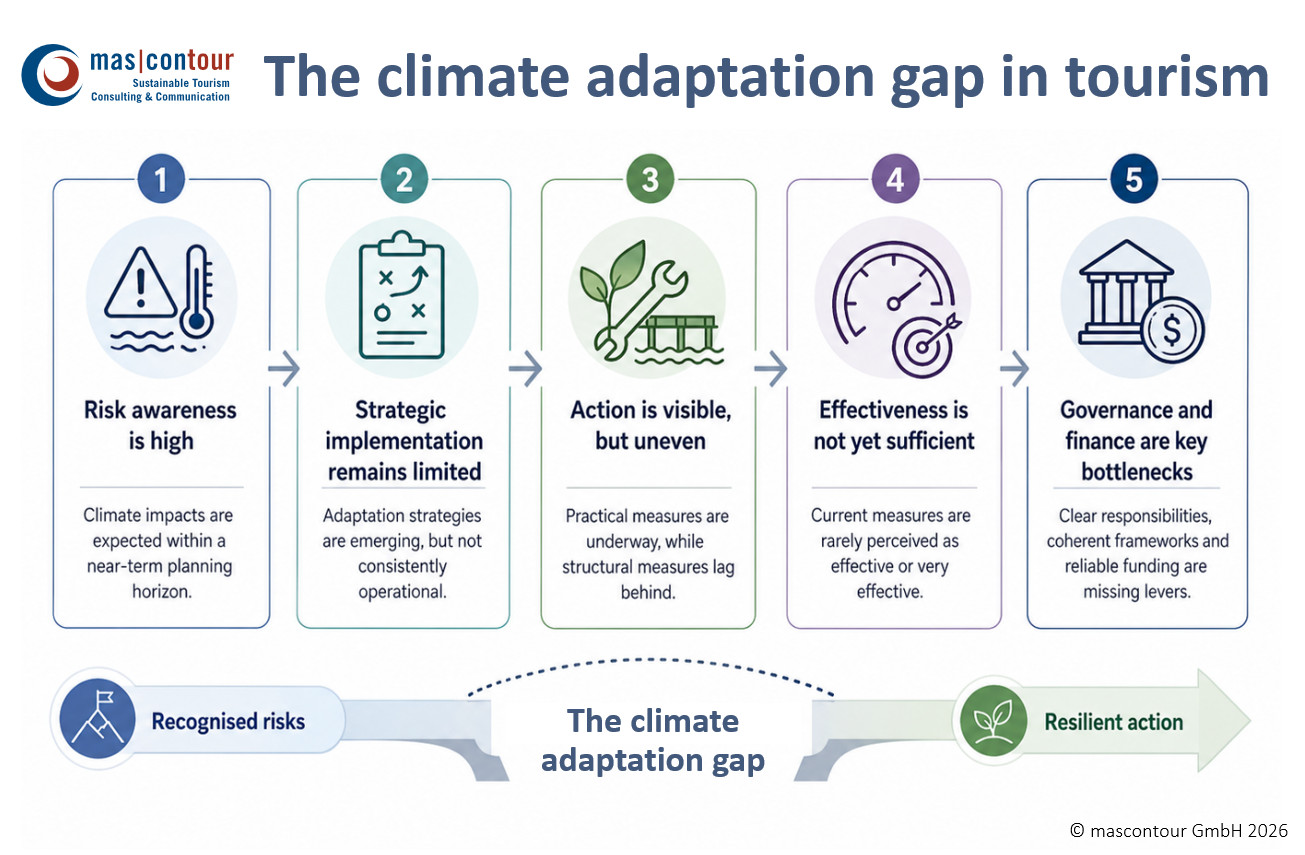
Climate Adaptation in Tourism: New Global White Paper Reveals the Tourism Sector’s Adaptation Gap
- Categories
- Coastal, maritime and inland water tourism Cultural tourism Ecotourism +64 more

Reimagining Tourism: A Rightful Path to Global Prosperity
- Categories
- Coastal, maritime and inland water tourism Cultural tourism Ecotourism +42 more