

Knowledge documents
19 June 2026
Economic Impact Supported by Booking.com in Europe
Knowledge documents
19 June 2026
Login / create an account to be able to react
-
51
Research commissioned by Booking.com in partnership with Oxford Economics highlights the scale of tourism’s contributions to jobs and economic growth across the continent – and the role of Booking.com in connecting travel and tourism businesses of all sizes to global demand
Booking.com
Oxford Economics
Tourism Economics
Topics
Austria
Belgium
Bulgaria
Croatia
Cyprus
Czechia
Denmark
Estonia
EU-27
Finland
France
Germany
Greece
Hungary
Ireland
Italy
Latvia
Lithuania
Luxembourg
Malta
Netherlands
Poland
Portugal
Romania
Slovakia
Slovenia
Spain
Sweden
Switzerland
Academic / Research and VET Institutions
Company with 250 or more employees
Destination Management & Marketing Organisations
EU Institutions
International Organisations
Local Authorities
Media / Journalist Organisations
National authorities
Regional Authorities
SMEs (a company with less than 250 employees)
-
Specific types of tourism
-
-
Adventure tourism
-
Coastal, maritime and inland water tourism
-
Cultural tourism
-
Ecotourism
-
Education tourism
-
Festival tourism
-
Gastronomy tourism
-
Health and medical tourism
-
MICE tourism
-
Mountain tourism
-
Religious tourism
-
Rural tourism
-
Sports tourism
-
Urban/city tourism
-
Wellness tourism
-
-
Transition Pathway Strategic Areas
-
-
Cross-border travelling
-
Digitalisation of tourism SMEs and destinations
-
Online visibility of tourism offer
-
Tourism strategies
-
-
Business activities
-
-
Activities of amusement parks and theme parks
-
Activities of associations and other organisations supporting tourism
-
Air passenger transport
-
Camping grounds, recreational vehicle parks and trailer parks
-
Events catering and other food services
-
Festivals, cultural and entertainment activities
-
Gardens and nature reserves activities
-
Holiday Housing / Apartments and other short stay accommodation
-
Hotel and similar accommodation
-
Mobile beverage services
-
Mobile food services
-
Museums
-
Operation of historical sites
-
Other
-
Other accommodation
-
Other amusement and recreation activities
-
Other food and beverage services
-
Other holiday reservation services
-
Other tourism transportation activities
-
Rail Passenger transport
-
Recreational and sport activities
-
Restaurants, cafes and bars (Food and Beverage serving activities)
-
Road passenger transport
-
Tour operator activities
-
Travel agency activities
-
Water (sea, coastal and inland) passenger transport
-
Share
Headline findings and methodology
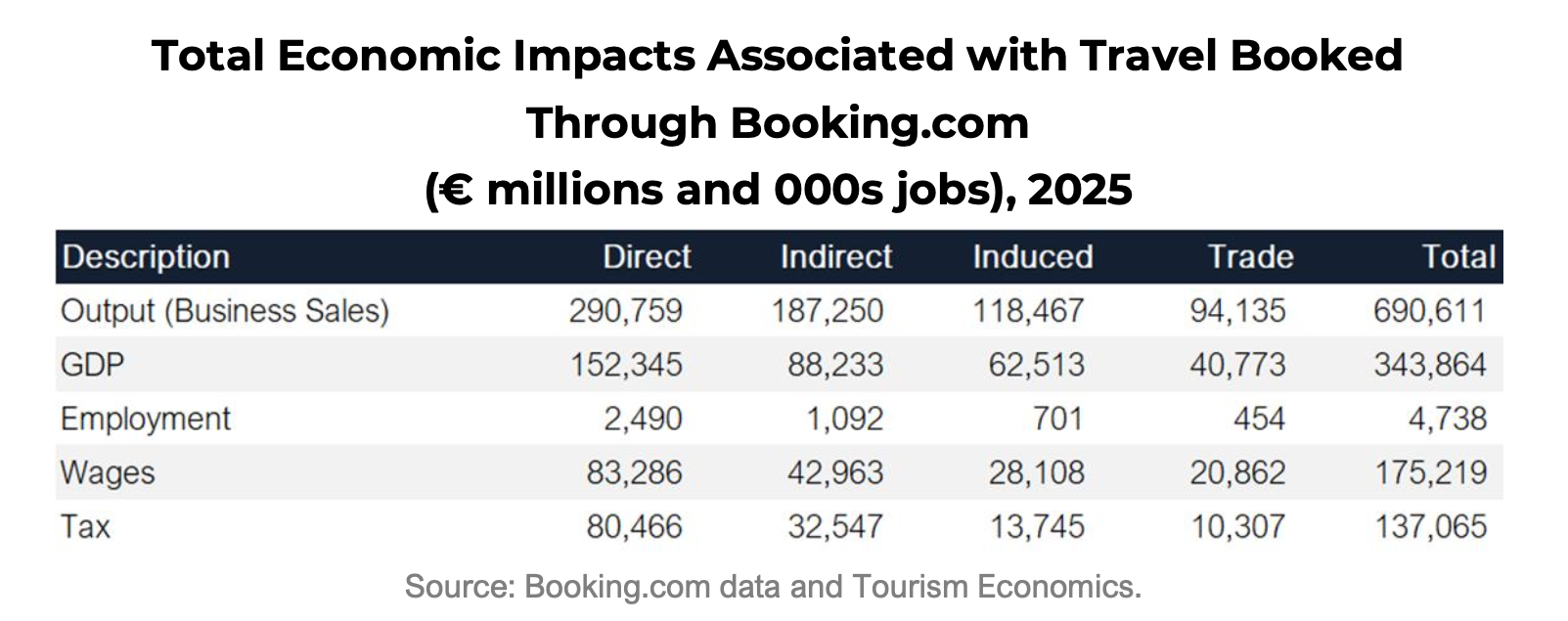
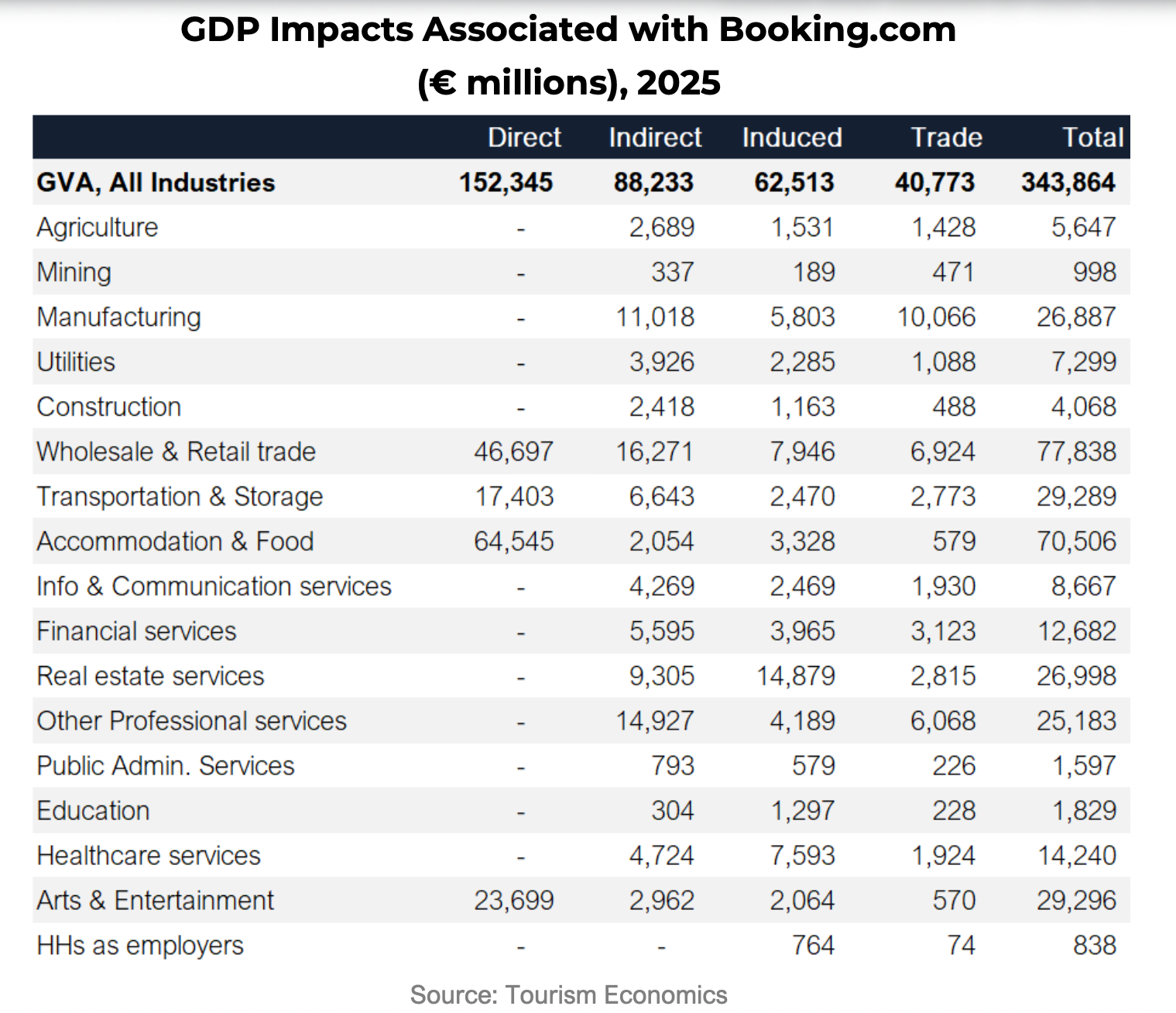
The analysis estimates that travel booked through Booking.com supported €690,611 billion in total economic output across Europe (EU-27, plus the United Kingdom and Switzerland) in 2025. This activity contributed €344 billion to European GDP, generated €137 billion in tax revenues, supported more than 4.7 million jobs, and was associated with €175 billion in wages.
These impacts extend beyond the tourism sector itself. Visitor spending supports activity across accommodation, food services, retail, transport, entertainment and recreation, while also generating additional demand throughout wider supply chains.
Direct Visitor Spending
According to the analysis, travellers whose trips were booked through Booking.com spent €291 billion during their stays in Europe in 2025. This spending benefited a broad range of businesses, including accommodation providers, restaurants, retailers, transport operators and entertainment venues.
The study estimates that this direct visitor spending contributed €152 billion to GDP and directly supported nearly 2.5 million jobs. The analysis includes both international and domestic travel and covers trips to the 29 European markets included in the study, regardless of travellers’ country of origin.
Methodology
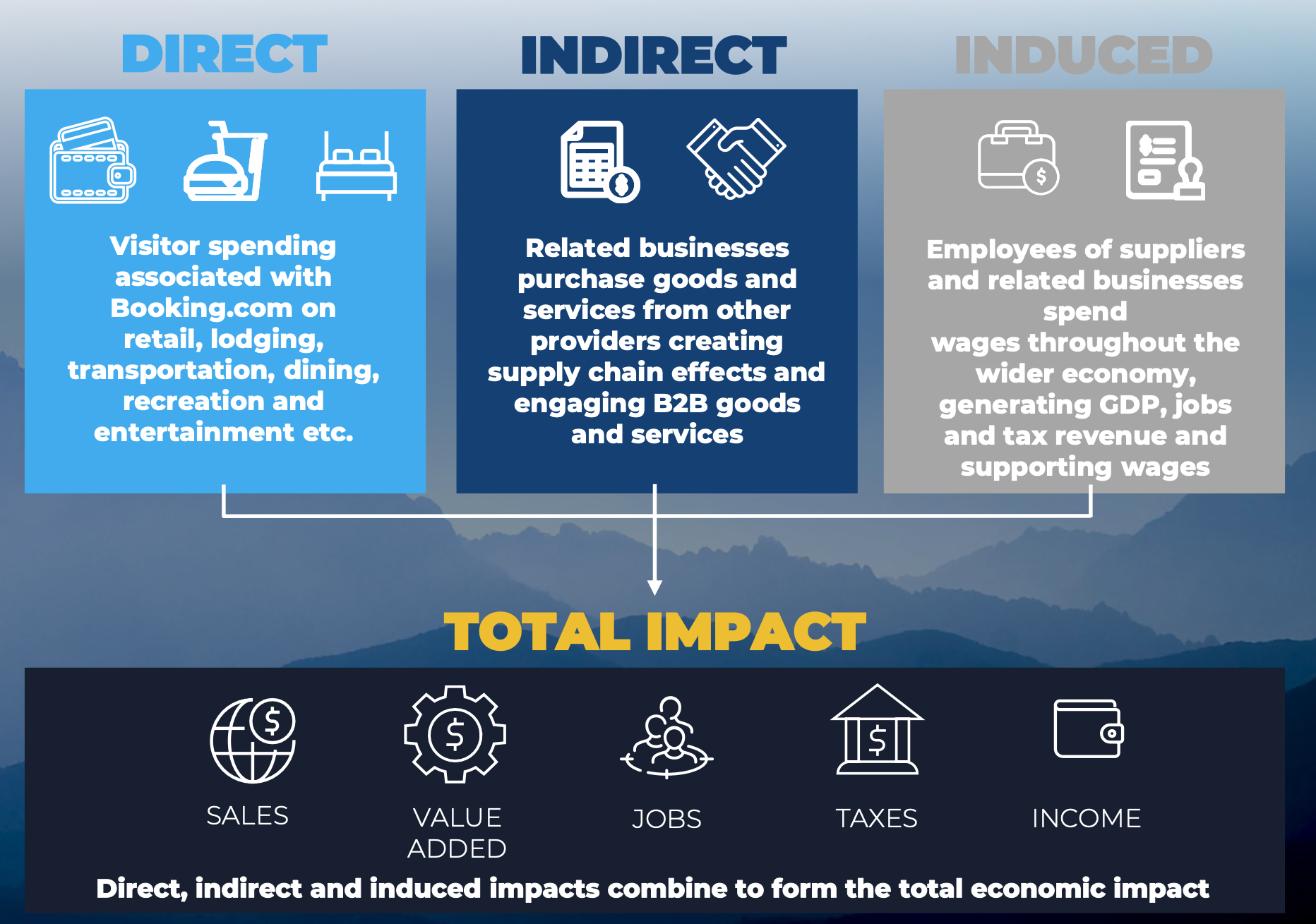
The research was conducted by Tourism Economics, an Oxford Economics company, using an Input-Output (I-O) modelling framework to trace how visitor spending flows through the economy. The model captures three layers of impact:
• Direct impacts, representing initial visitor spending on accommodation, food, transport, retail and other services.
• Indirect impacts, reflecting purchases made by businesses from suppliers throughout the economy.
• Induced impacts, generated when employees spend wages earned through direct and indirect economic activity.
For each layer, the model estimates economic output, Gross Value Added (GDP), employment, wages and tax revenues.
Supply Chain and Cross-Border Effects
The findings highlight the interconnected nature of European economies. Visitor spending creates economic effects that extend beyond the destination where the original expenditure occurs, including through supply chains and cross-border trade relationships.
Excluding trade effects, travel booked through Booking.com supported €596 billion in economic output and contributed €303 billion to GDP. Cross-border trade effects added a further €94 billion in output and €41 billion in GDP, illustrating how tourism demand can generate economic benefits across multiple European markets.
Relevance for European Tourism Ecosystems
The findings highlight how digital travel platforms can help tourism businesses, including independent accommodation providers and SMEs, connect with international and domestic demand. By facilitating access to travellers across markets, these platforms can contribute to business activity, employment and regional economic development.
The research also illustrates the broader role of tourism as an economic ecosystem, where visitor spending generates impacts not only for tourism-facing businesses but also for suppliers, service providers and communities throughout Europe.
Input-Output modelling is a well-established methodology used extensively by governments, international organisations, tourism authorities (e.g. UNWTO) and independent economic consultancies to assess the economic impacts of tourism, major events, infrastructure projects and public policy interventions.
Documents
Comments (0)
Related content




Connected Partnership Opportunities
See also
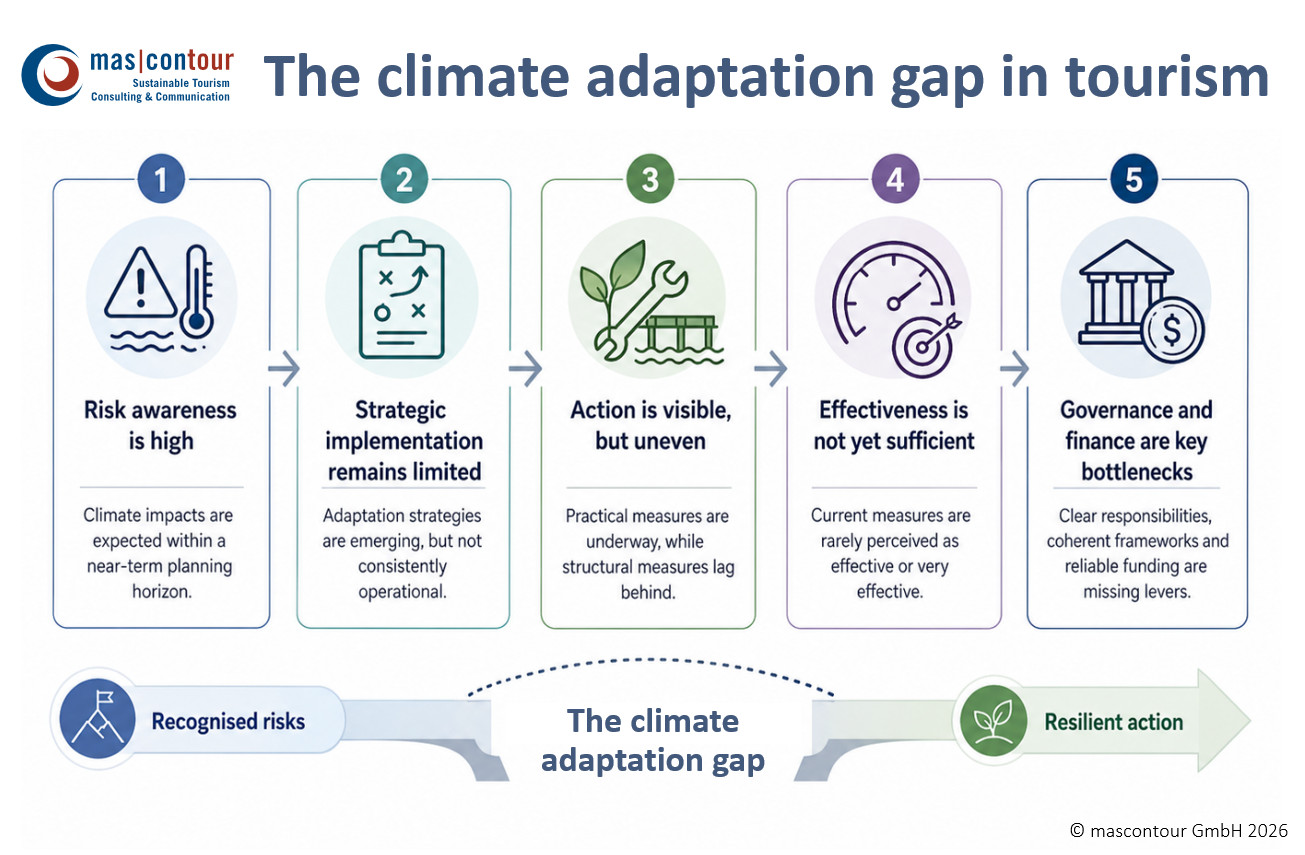
Climate Adaptation in Tourism: New Global White Paper Reveals the Tourism Sector’s Adaptation Gap
- Categories
- Coastal, maritime and inland water tourism Cultural tourism Ecotourism +64 more
“Key updates and trends in 2024” Summary
- Categories
- Coastal, maritime and inland water tourism Cultural tourism Ecotourism +64 more

"Addressing changing holiday patterns due to climate change" Summary
- Categories
- Coastal, maritime and inland water tourism Cultural tourism Ecotourism +63 more