

Policy
21 May 2026
Fertiliser Action Plan: safeguarding food security and supply
Policy
21 May 2026
Login / create an account to be able to react
-
928
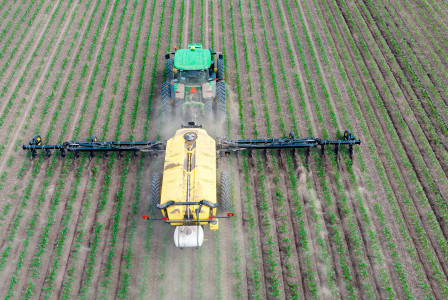
On 19 May 2026, the European Commission adopted the Fertiliser Action Plan to help farmers cope with high fertiliser costs and scarcity, strengthen production within the EU and curb reliance on imports. Building on the 2022 Fertilisers Communication, it combines near-term relief on affordability and supply security with longer-term measures to scale up home-grown output and accelerate the move towards bio-based, low-carbon and circular fertilisers - protecting food security and strategic autonomy while keeping climate and environmental goals intact.
Topics
Albania
Armenia
Austria
Belgium
Bosnia and Herzegovina
Bulgaria
Croatia
Cyprus
Czechia
Denmark
Estonia
EU-27
Finland
France
Georgia
Germany
Greece
Hungary
Iceland
Ireland
Italy
Kosovo
Latvia
Liechtenstein
Lithuania
Luxembourg
Malta
Moldova
Montenegro
Netherlands
North Macedonia
Norway
Poland
Portugal
Romania
Serbia
Slovakia
Slovenia
Spain
Sweden
Switzerland
Türkiye
Ukraine
Other
Academic / Research and VET Institutions
Business Support Organisation
Company with 250 or more employees
Cluster Organisations
Consumer Organisations
Cultural and Heritage Organisations
Destination Management & Marketing Organisations
EU Institutions
Financial Institutions and Investors
Industry Associations and Chambers of Commerce
International Organisations
Local Authorities
Media / Journalist Organisations
National authorities
Networks and Federations / Confederations
NGOs / Non-profits
Notified Bodies
Regional Authorities
SMEs (a company with less than 250 employees)
Social Economy Entity
Trade Unions
Other
-
Agri-food strategic objectives
-
-
Healthy and sustainable diets
-
Food loss and waste
-
A climate – neutral food chain
-
Circular and resource-efficient food chain
-
Sustainable economic growth and employment
-
Sustainable food supply chain
-
Sustainable sourcing
-
Share
Sudden supply disruptions and volatile prices have left farmers across Europe under heavy pressure and revealed how exposed the continent is to outside shocks in fertiliser supply. The Plan responds along three lines of work.
First, on direct help for farmers, the Commission will deliver exceptional aid through existing agricultural-policy instruments and propose a sizeable top-up of the agricultural reserve from the EU budget. This package, due before the summer, aims to give immediate liquidity relief ahead of the next production cycle. A follow-up legislative package will let Member States draw more fully on their CAP Strategic Plans, with a new liquidity scheme, more room for advance payments and stronger incentives to use fertilisers more efficiently. Further steps address nutrient management, nutrient-efficient farming, an expanded role for Farm Advisory Services, easier use of digestates under environmental safeguards, and clearer rules once the Nitrates Directive evaluation concludes.
Second, on domestic production and decarbonisation, the Commission wants to head off deindustrialisation, keep supplies stable and reduce import dependency. It will champion European alternatives - organic and bio-based fertilisers, algae biomass, soil enhancers, microbial solutions, biostimulants, and nitrogen and phosphorus recovered from sewage sludge. Under the coming Emission Trading Scheme review, any extra flexibility for the sector would be matched by commitments to decarbonise, lift output of bio-based and circular fertilisers, and keep home-grown products affordable. The Commission will also weigh incentives for carbon farming and removals, trim red tape and market barriers, build demand for sustainable fertilisers, simplify the handling of by-products under the Waste Framework Directive evaluation, and steer existing funds - cohesion funds in particular - towards biogas, biomethane and wastewater infrastructure for sludge valorisation and nutrient recovery.
Third, on transparency and preparedness, the Commission will set up an EU fertilisers value chain Partnership uniting producers, farmers and Member States, with a first policy dialogue in the coming months. It will sharpen market monitoring and early warning, propose a framework for regular data, and report on how Carbon Border Adjustment Mechanism and Emission Trading System costs reach fertiliser and food prices. The Fertilisers Market Observatory stays the central source of market intelligence. The Commission will additionally assess stockpiling options for key inputs, including seasonal or minimum stocks and possible joint procurement, and keep cooperating with candidate, neighbouring and partner countries to widen and diversify supply.
Underpinning all of this, fertilisers are central to farm productivity and food security and weigh heavily on production costs - so with sowing season near, farmers need supplies they can count on and afford, even as Europe works towards a more resilient and circular domestic industry. The Plan does not start from scratch: it carries forward measures the Commission has already put in place. These include a gentler CBAM calculation for fertilisers - a 1% markup rather than the 10% used elsewhere, climbing in stages to 30% for other sectors - alongside temporary duty-free quotas introduced in February 2026 for key nitrogen fertilisers and inputs such as ammonia and urea, a temporary State aid framework in April 2026, and a High-level Dialogue with stakeholders that fed directly into the Plan.
#FoodSecurity #SustainableFarming #FertiliserSupply
Comments (0)
Connected Partnership Opportunities
See also
Bioeconomy strategy
- Categories
- Food loss and waste A climate – neutral food chain Circular and resource-efficient food chain +3 more
2030 Consumer Agenda
- Categories
- Food loss and waste A climate – neutral food chain Circular and resource-efficient food chain +3 more
European Biotech Act
- Categories
- Food loss and waste A climate – neutral food chain Circular and resource-efficient food chain +3 more