

Knowledge documents
22 September 2026
Measuring regenerative tourism means looking beyond visitor numbers
Knowledge documents
22 September 2026
Login / create an account to be able to react
-
8

MED4REGEN is developing a way to evaluate regenerative tourism that goes beyond counting visitors, asking instead whether local institutions, communities and stakeholders have actually changed as a result.
Editorial team
University of Sarajevo
Topics
EU-27
Academic / Research and VET Institutions
Cultural and Heritage Organisations
Local Authorities
SMEs (a company with less than 250 employees)
-
Specific types of tourism
-
-
Cultural tourism
-
-
Transition Pathway Strategic Areas
-
-
Best practices, peer learning and networking
-
Improving statistics and indicators
-
-
Business activities
-
-
Activities of associations and other organisations supporting tourism
-
Share
Traditional tourism metrics, visitor counts, overnight stays, ticket sales, capture activity but not necessarily impact. MED4REGEN's methodology instead starts before visitors even arrive, focusing on whether museums and cultural institutions have become more open to collaboration, whether local stakeholders are working together differently, and whether participants have gained new skills or confidence. This is the focus of the project's Pilot Action 1, built on the idea that regenerative tourism depends on trust and shared knowledge being established first.
This reframes evaluation as something that runs throughout a project rather than only happening at the end: documenting what's being learned, flagging unexpected partnerships, and identifying what needs adjusting before moving to the next stage. Quantitative indicators, participation numbers, stakeholder diversity, completed pilot activities, still matter, but they sit alongside qualitative questions about whether institutions collaborate more effectively and whether new ideas have enough momentum to continue after the project ends. Sarajevo is used as a working example, where museums are testing Living Labs, temporary exhibitions and public events that treat heritage as something communities actively shape rather than passively preserve.
#RegenerativeTourism #TourismSustainabilityIndicators #CulturalPreservation #CommunityBasedTourism
Comments (0)
Connected Partnership Opportunities
See also

"Awareness of changes in tourism demand and twin transition" Summary
- Categories
- Coastal, maritime and inland water tourism Cultural tourism Ecotourism +64 more
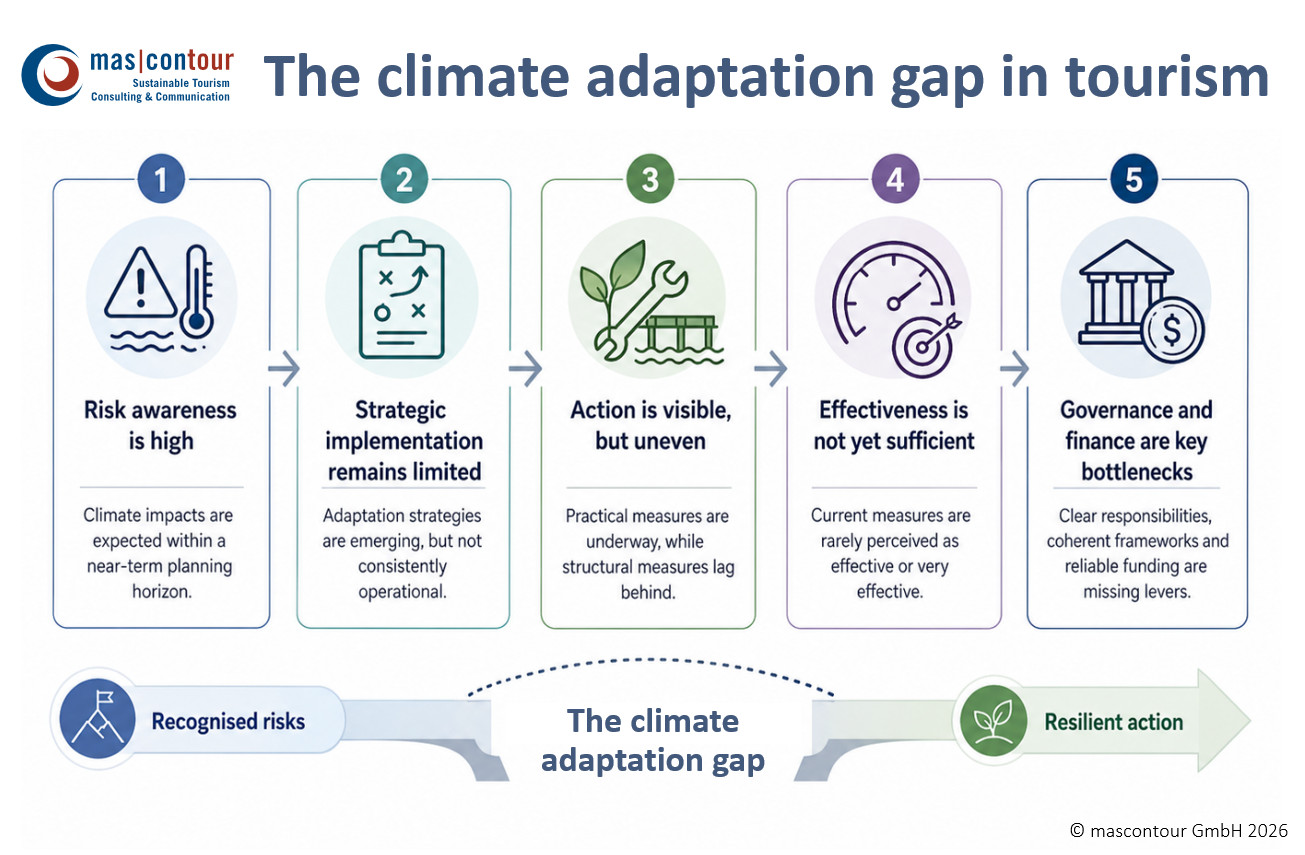
Climate Adaptation in Tourism: New Global White Paper Reveals the Tourism Sector’s Adaptation Gap
- Categories
- Coastal, maritime and inland water tourism Cultural tourism Ecotourism +64 more
“Key updates and trends in 2024” Summary
- Categories
- Coastal, maritime and inland water tourism Cultural tourism Ecotourism +64 more